
Flush sediment
Yearly, or every six months with very hard water.
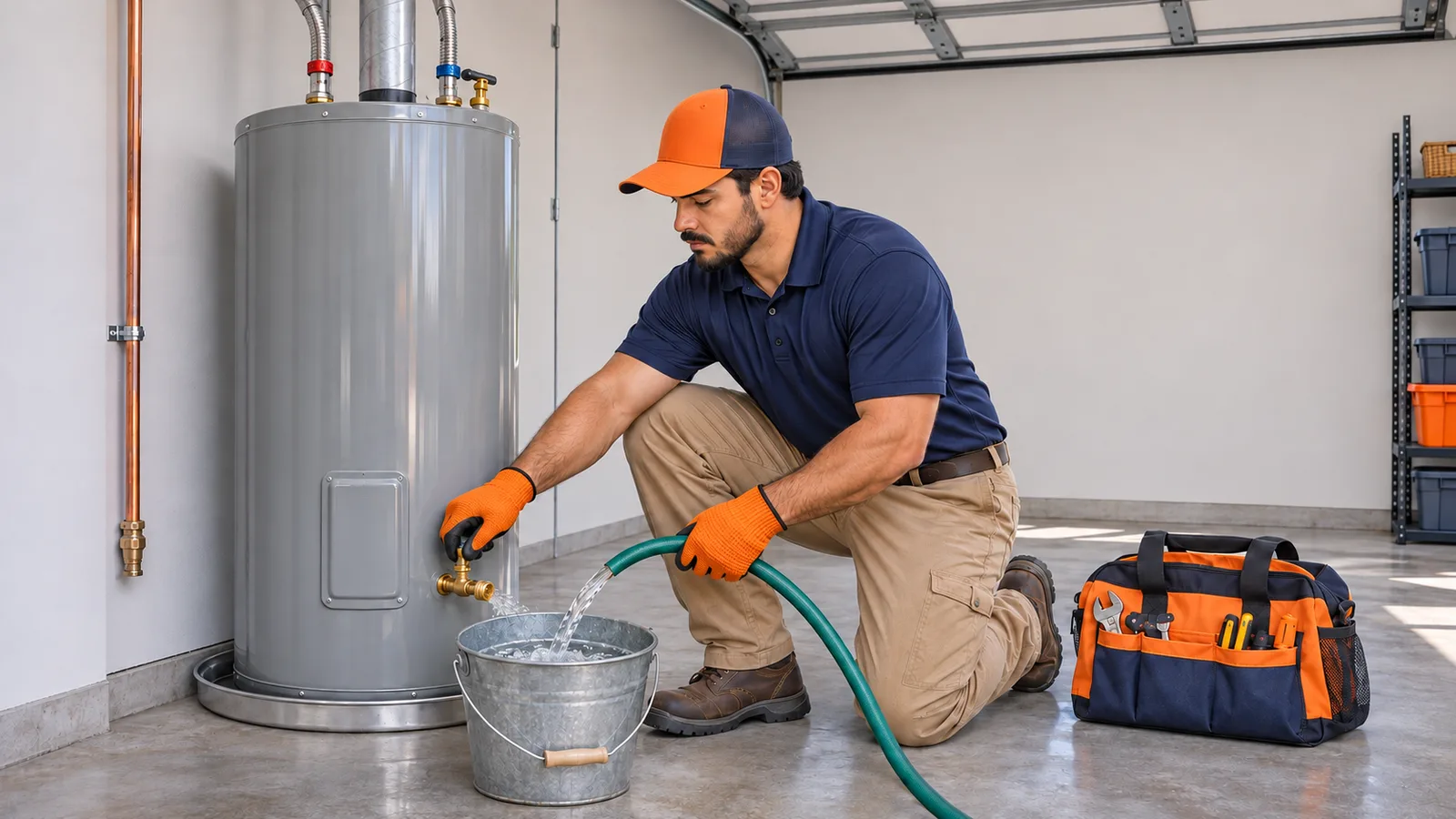
Water heater maintenance and flushing
Sediment, rumbling or slow hot water? An experienced local plumber can flush and service your water heater so it lasts longer.
Call (726) 268-4856Last updated November 8, 2026
Hard water care
At a glance
Water heater maintenance in San Antonio is mostly about hard water. Much of the city's water comes from the Edwards Aquifer, which carries dissolved calcium and magnesium. When that water is heated, the minerals drop out as sediment in a tank or scale in a tankless heat exchanger.
Sediment insulates the bottom of a gas tank, makes popping noises and wastes energy. In an electric tank it buries the lower element until it burns out. Regular service slows all of that down.
If you searched for water heater maintenance near me, here is how this works: we connect you with an independent plumber who services water heaters in your area, and they quote the visit.
Flushing
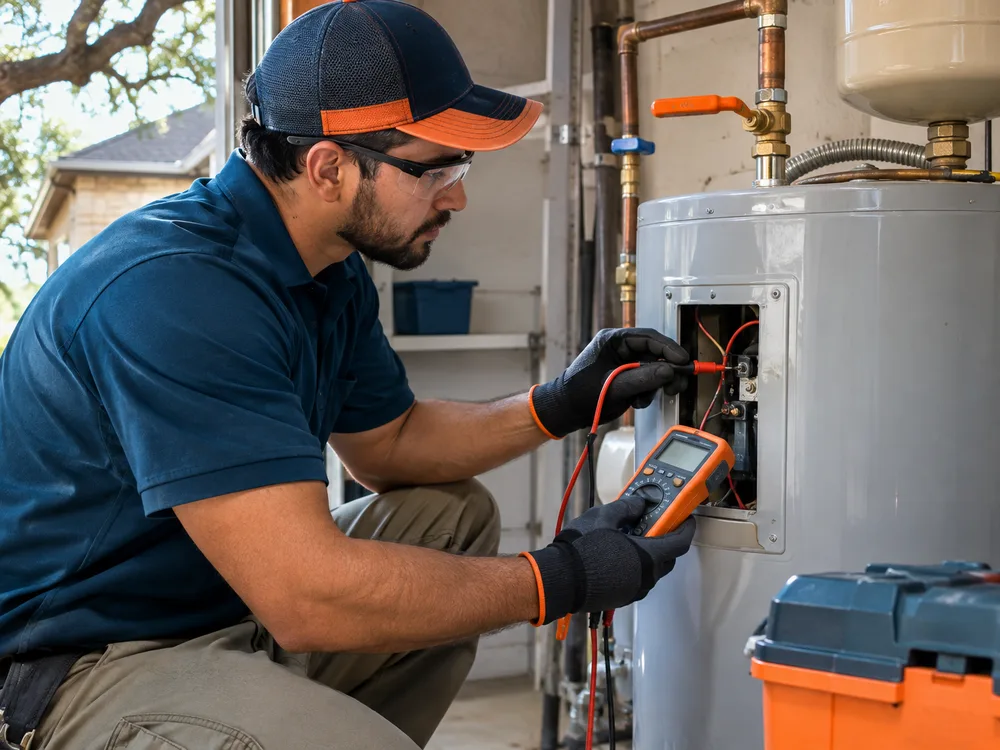
Flushing water heater tanks once a year removes sediment before it hardens. Homes with very hard water, or tanks that already rumble, may benefit from flushing every six months.
Draining a water heater means turning off the power or gas, closing the cold-water supply, connecting a hose to the drain valve and running it until the water clears. On a tank that has not been flushed for years, sediment can clog or break the plastic drain valve, so many owners leave the first flush to a plumber.
Checklist
A complete hot water tank maintenance visit covers these items.
Yearly, or every six months with very hard water.
Lift the T&P valve lever once a year to confirm it opens and reseals. A valve that drips afterward needs replacing.
Every two to three years in hard water. Replace it when the core wire shows or it is worn to half its thickness.
Gas: a clean blue flame and a clear burner area. Electric: element resistance and thermostat settings.
Vent connector slope and joints, gas line and water connectors for corrosion or drips.
Protect the tank
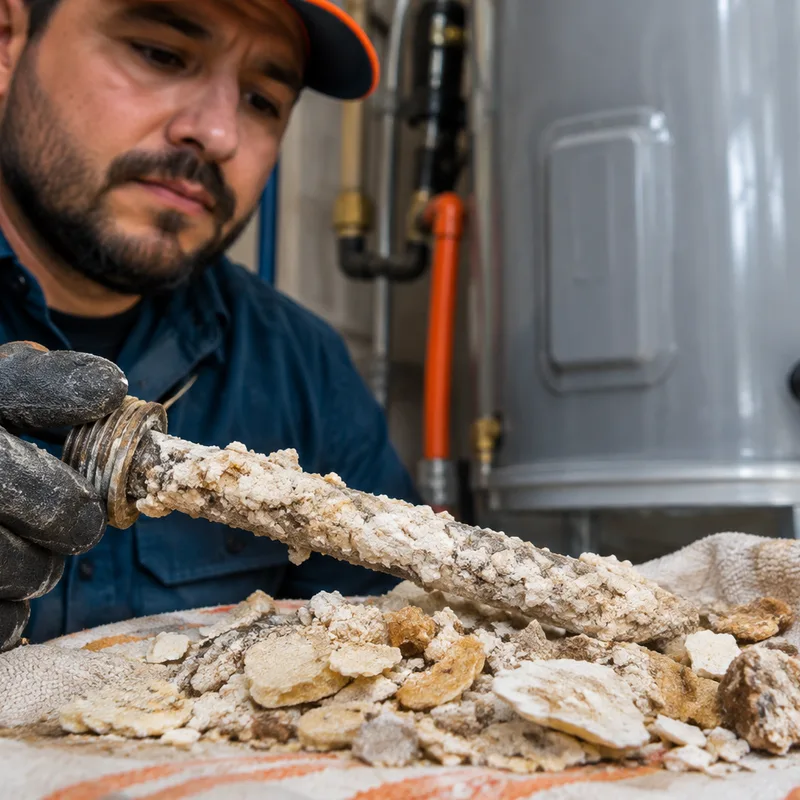
The anode rod is a metal rod inside the tank that corrodes so the steel tank does not. Once it is used up, the tank starts to rust from the inside. Water heater anode rod replacement is one of the simplest ways to extend the life of a tank.
A rotten egg smell from hot water often comes from the anode reacting with the water. A plumber may suggest a different anode material to stop the smell. Rods can be hard to remove on older tanks, so this is often done during a flush.
Other units
Tankless and heat pump units need a different kind of water heater maintenance service than a standard tank.
Descale the heat exchanger about once a year, clean the inlet filter, and check venting and error history.
Clean the air filter, keep the condensate drain clear, and flush the tank like a standard tank.
Tank rumbling? Book a flush with a local plumber.
Call (726) 268-4856Quotes
A water heater service visit in San Antonio usually includes a flush, a relief valve test, an anode rod check and a look at the burner or elements and connections. Parts such as an anode rod, drain valve or relief valve are extra.
Each independent contractor sets their own prices. If the plumber finds a failed part or a leaking tank, they can explain repair or replacement options.
Homeowner questions
About once a year for most tanks. With very hard water, or a tank that already rumbles, every six months is reasonable. Tankless units should be descaled about once a year.
It can expose a tank that is already failing, and old plastic drain valves can break or clog. A plumber can judge whether flushing is worthwhile on an older tank.
Usually the anode rod is reacting with sulfate and bacteria in the water. Replacing the anode with a different material and flushing the tank often fixes it.
Typically a flush, a relief valve test, an anode rod check, and inspection of the burner or elements, venting and connections. Parts are extra.
No. We are a free referral service. We connect you with an independent local plumber who performs the service and quotes the visit.
Tell us what kind of water heater you have and when it was last serviced. We will connect you with an independent local plumber who can flush and inspect it. No obligation to hire.