
Equipment Selection
Tank capacity, recovery rate, fuel type, dimensions, and household demand all affect the choice. The replacement should fit the space and provide enough hot water without relying on an unsuitable like-for-like swap.
Serving San Antonio, Texas & surrounding areas
Mon–Fri 8am–6pm Sat 9am–2pm
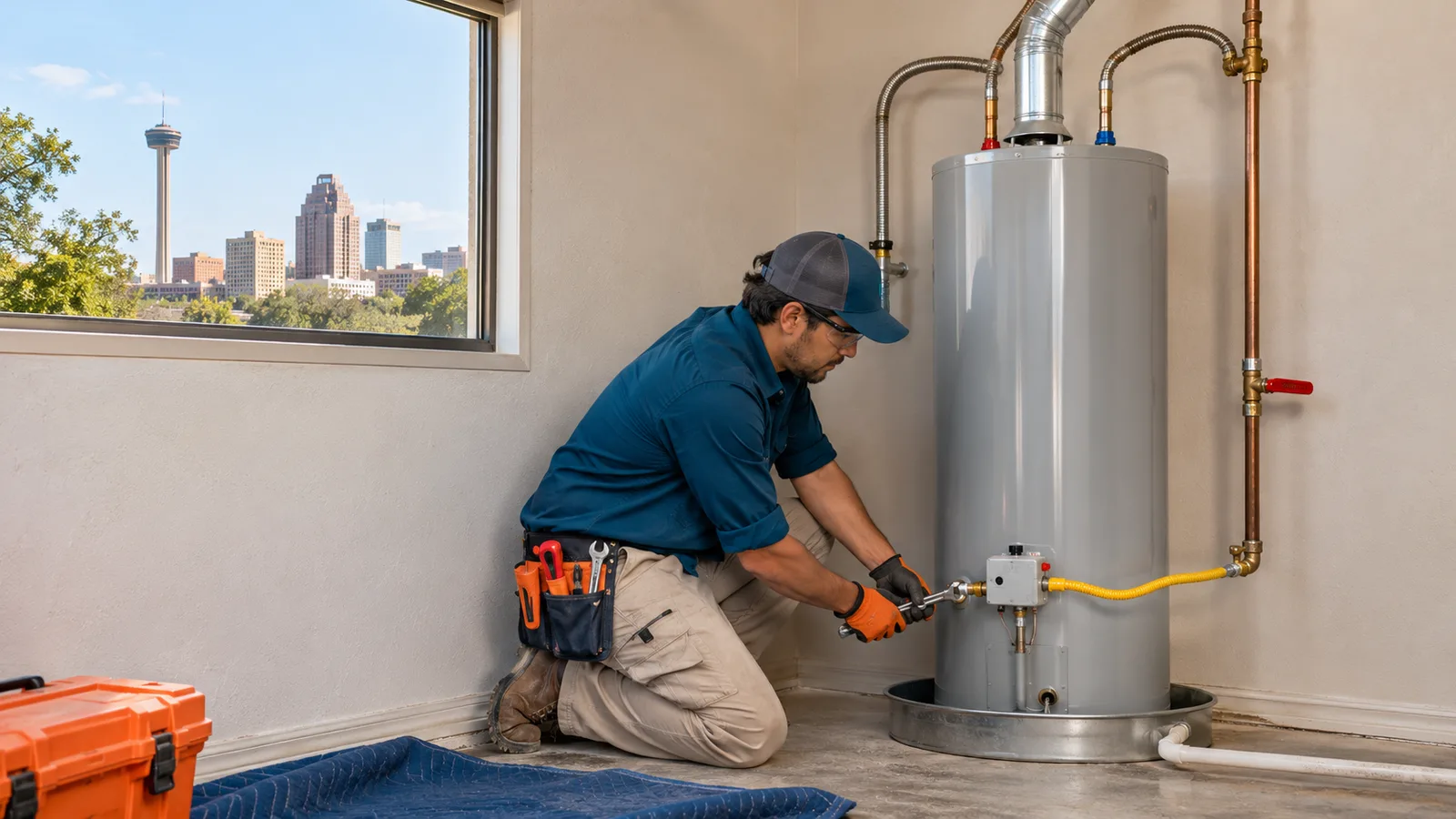
Residential service in San Antonio
Replace a leaking, failing, or undersized water heater with a properly selected unit, a clear installation scope, and upfront cost details before work begins.
Replacement planning
San Antonio water heater replacement begins with more than choosing a tank that fits the available space. The new unit must match the household's hot water demand, available fuel or electrical supply, venting requirements, connection layout, and installation location.
Replacement may be the practical choice when a tank leaks, corrosion is visible, hot water runs out too quickly, recovery has slowed, or repeated repairs no longer make sense. An inspection helps separate a failed appliance from issues involving the thermostat, heating elements, burner, gas control, venting, water pressure, or nearby plumbing.
San Antonio's hard water can leave mineral scale inside a tank and on heating components. Scale may reduce usable capacity and slow heat transfer, so the condition of the existing unit and the home's water quality should be considered when planning the replacement. Water Heater Replacement San Antonio provides a clear scope that covers the selected unit, necessary connections, removal considerations, and the work required for a safe installation.
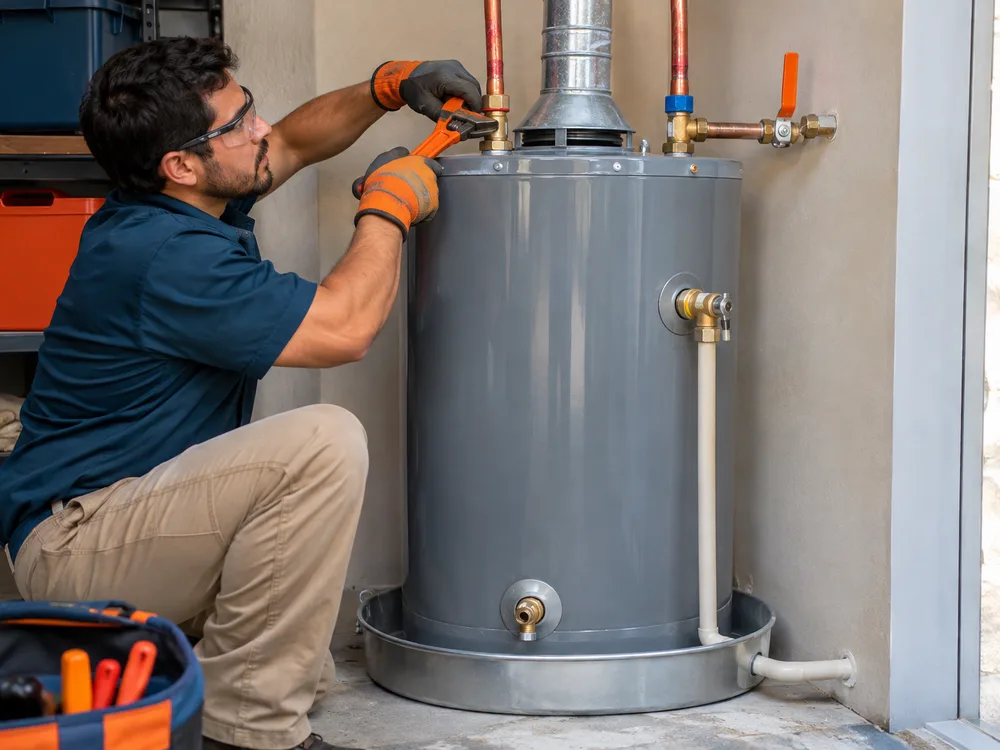
Complete equipment support
Troubleshooting and repair for water heaters with inconsistent temperatures, ignition trouble, unusual noises, slow recovery, or no hot water.
Tankless system planning and installation based on household demand, fuel supply, venting, electrical needs, and the unit's required flow rate.
Installation of residential water heaters with attention to capacity, energy source, connection requirements, venting, drainage, and accessible controls.
Removal planning and replacement of leaking, aging, damaged, or poorly performing water heaters with equipment suited to the household and installation space.
Inspection and service for tank and tankless equipment, including performance concerns, visible leaks, control issues, and maintenance needs.
Installation essentials
Tank capacity, recovery rate, fuel type, dimensions, and household demand all affect the choice. The replacement should fit the space and provide enough hot water without relying on an unsuitable like-for-like swap.
The planned work should identify the water heater, connection changes, venting or electrical needs, drainage provisions, removal, and site conditions that affect labor. This gives you useful cost details before installation starts.
A replacement may involve a temperature and pressure relief discharge line, drain pan, expansion control, vent connector, gas shutoff, sediment trap, bonding, or dedicated electrical protection, depending on the equipment and location.
Mineral-heavy water can produce scale inside tanks and on heating components. The existing unit's sediment, connections, and drain condition provide useful clues when choosing equipment and discussing future maintenance.
After installation, the system should be filled, purged, started, and checked at its connections. Gas-fired equipment also requires attention to ignition and venting, while electric tanks must be full before power is applied.
Local replacement planning
Water Heater Replacement San Antonio provides residential water heater replacement in San Antonio, Texas.
The work focuses on selecting and installing equipment that matches the home's hot water demand and existing utilities. Each project starts with the current unit, its location, fuel type, capacity, connections, and reason for failure. Those facts determine whether the job is a straightforward replacement or requires changes to venting, electrical service, drainage, or nearby plumbing.
Clear planning matters because a water heater combines pressurized water with gas, electricity, or both. A useful proposal explains what will be installed and what site conditions affect the work, allowing the homeowner to review the scope before deciding.
Cost considerations
Water heater replacement in San Antonio typically costs about $1,300 to $3,500 for a standard tank installation. Straightforward electric replacements often fall near the lower end, while gas units, larger tanks, difficult access, venting changes, or code-related updates can move the price higher. Tankless conversions commonly cost more because utility and venting modifications may be needed.
Final price depends on capacity, fuel type, equipment efficiency, permit needs, access, connection condition, drain provisions, and disposal. The exact cost is confirmed after the existing installation and proposed scope are inspected.
From inspection to startup
A clear sequence keeps equipment selection, site requirements, installation, and startup connected.
Book Your Free InspectionThe current unit, leak or performance problem, fuel source, capacity, venting, electrical supply, shutoffs, drainage, access, and connection condition are reviewed.
Equipment is selected according to household demand, available space, utility requirements, recovery needs, and whether a standard tank or tankless configuration is appropriate.
The installation plan identifies the proposed unit and any necessary connection, venting, electrical, drainage, access, permit, or removal work before the project proceeds.
The old unit is isolated and removed, then the new water heater is positioned and connected with the required water, fuel, electrical, venting, and relief components.
The water heater is filled, purged, started, and checked for proper operation. Connections, controls, temperature settings, ignition, and venting are reviewed as applicable.
A leaking tank can damage nearby flooring, walls, and stored belongings. Get the installation scope and cost details needed to plan the replacement.
Call for a Free EstimateLocal installation conditions
Water Heater Replacement San Antonio works throughout San Antonio communities where equipment location, home age, utility setup, and hard-water scale can shape the installation.
Established homes may have water heaters in utility rooms, garages, or tight closets where access, venting, and older connections need careful review.
Larger homes can place heavier demand on stored hot water, making tank capacity, recovery rate, and household usage important replacement considerations.
Older housing may have existing gas venting, shutoffs, or plumbing connections that should be inspected before selecting and installing a replacement unit.
Condominiums, townhomes, and single-family properties can present compact equipment spaces where dimensions, drainage, access, and utility configuration affect replacement planning.
Historic homes may combine older plumbing layouts with later utility updates, so available space, vent routing, electrical supply, and connection condition require close attention.
Newer residential development includes homes with varied household demand, making equipment capacity and the existing gas or electrical setup central to replacement planning.
Installation details
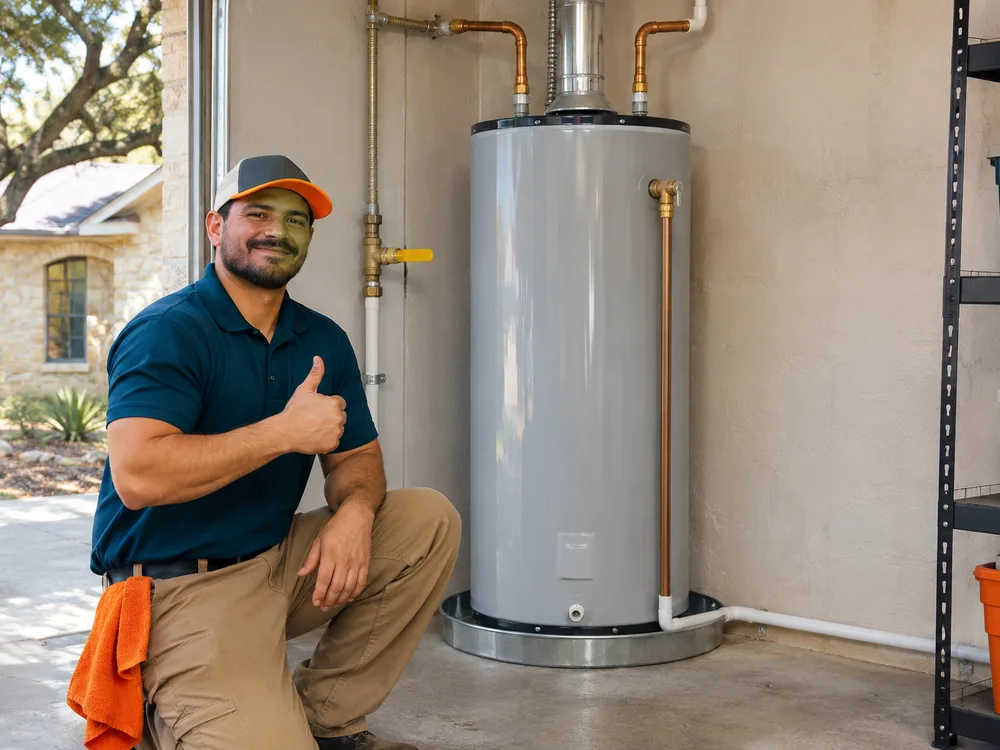
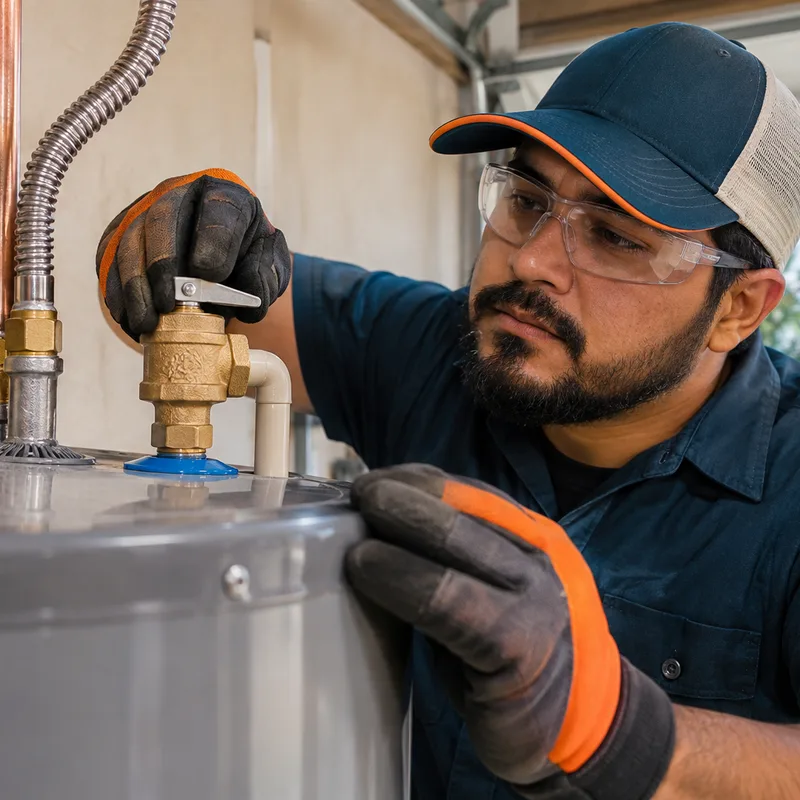
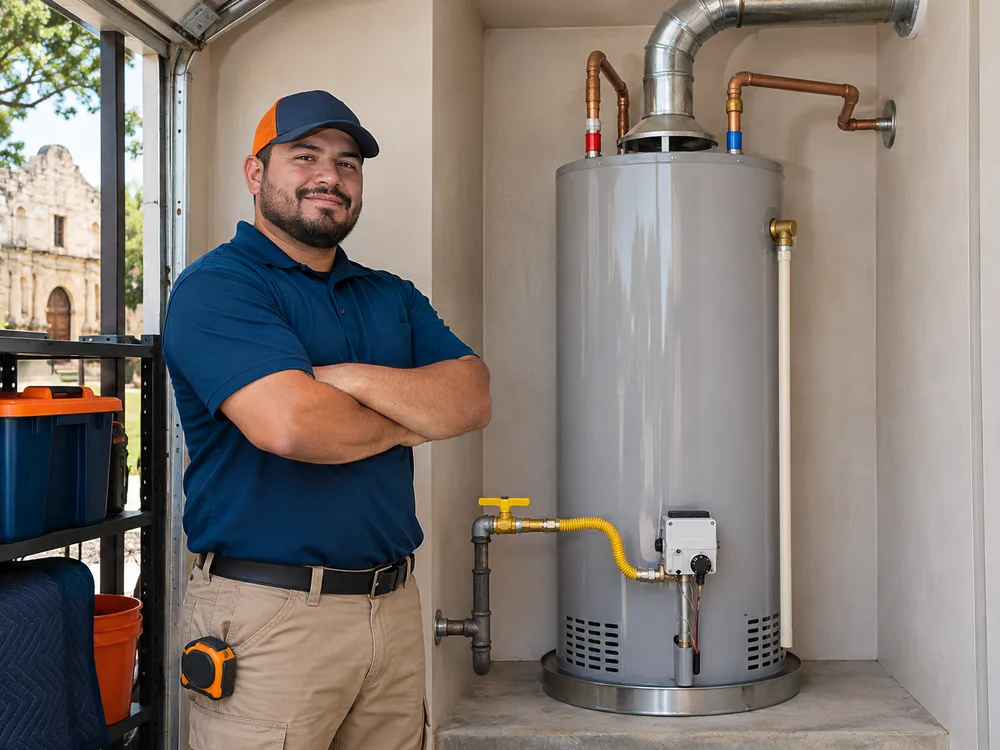
Homeowner questions
Scheduling depends on equipment availability, the installation setup, and whether utility or venting changes are required. Providing the unit's fuel type, capacity, location, and symptoms helps determine what the job is likely to involve.
A leaking storage tank generally requires replacement because the tank itself is not a practical repair. Water near the unit can also come from a valve, fitting, drain, or condensation, so the source should be identified before work is planned.
A tankless conversion is possible when the home can support the unit's gas or electrical demand, venting, water flow, and installation clearances. The existing utilities must be reviewed because conversion work can be more involved than a tank replacement.
Useful details include the current unit's fuel type, tank capacity, installation location, visible label, leak location, access conditions, and clear photos of the equipment and surrounding connections. These details help define the likely scope before an on-site inspection.
Replacement planning can cover gas and electric equipment when the home's available utilities and installation conditions match the proposed unit. Gas models require proper combustion and venting provisions, while electric models require the correct circuit and disconnecting means.
The right size depends on household hot water use, fixture demand, recovery rate, fuel type, and available installation space. Matching only the old tank's physical size can result in poor performance if household demand has changed.
Describe the current unit, the problem, and where it is installed. Water Heater Replacement San Antonio can help clarify the equipment options, installation scope, and expected next step.