
Top connections
Loose or corroded water connectors and fittings. Often repairable. A water heater leaking from top is usually here.
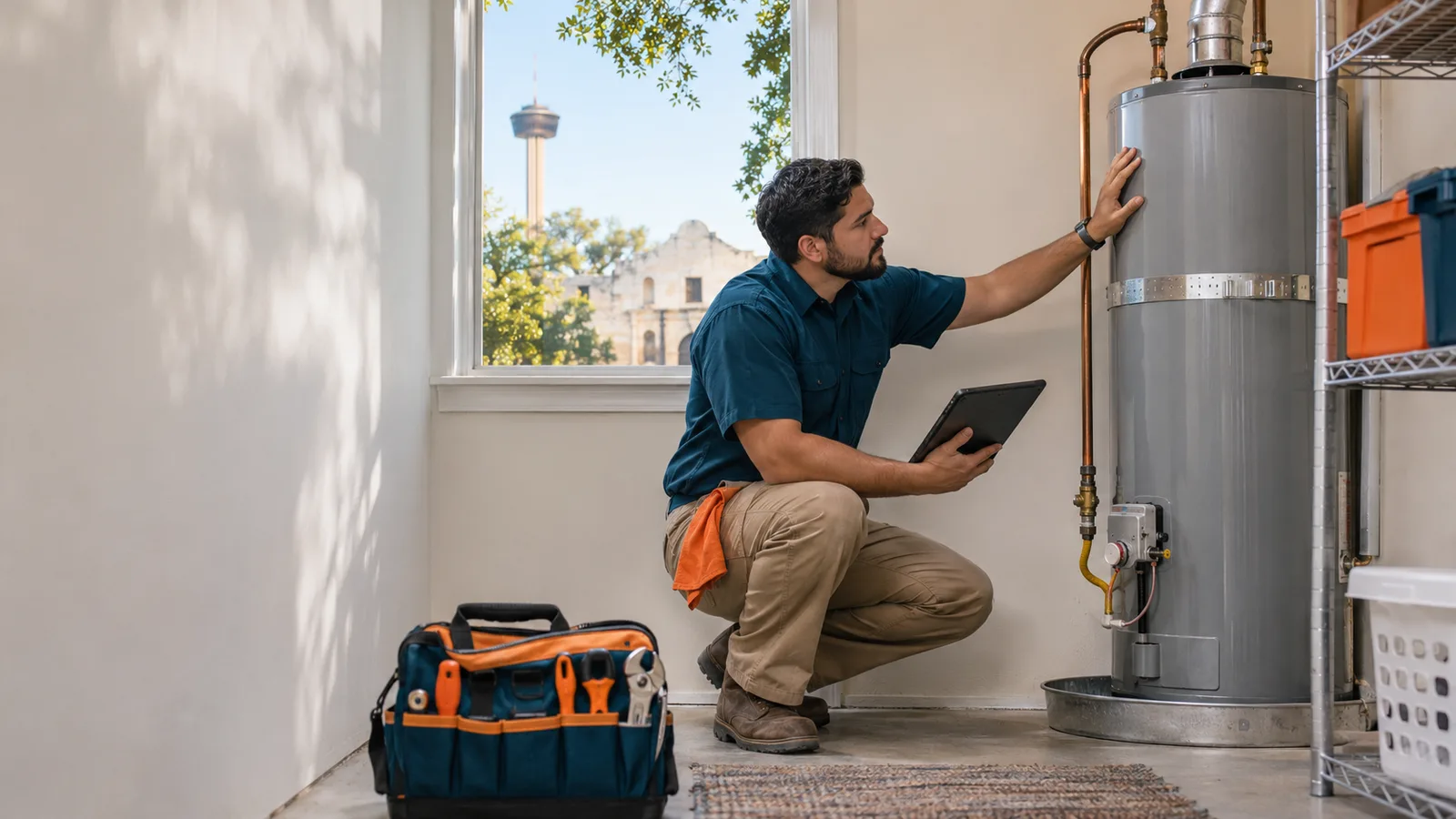
Emergency water heater help
Water pooling around your water heater? An experienced local plumber can find the leak and repair or replace the unit quickly.
Call (726) 268-4856Last updated November 8, 2026
Act now
At a glance
If your water heater is leaking, follow these steps in order. Water heater leaking near electrical parts is a shock risk, so power comes first.
Find the source
A water heater leaking from bottom usually means one of three things: the drain valve is dripping, the relief valve's discharge line is running down the side, or the tank has rusted through.
A drain valve leak can be stopped with a cap or a new valve. Water from the relief valve line means the valve is releasing pressure, which points to high pressure, high temperature or a missing expansion tank. Water seeping from under the jacket with no other source usually means the tank has failed and needs replacement.
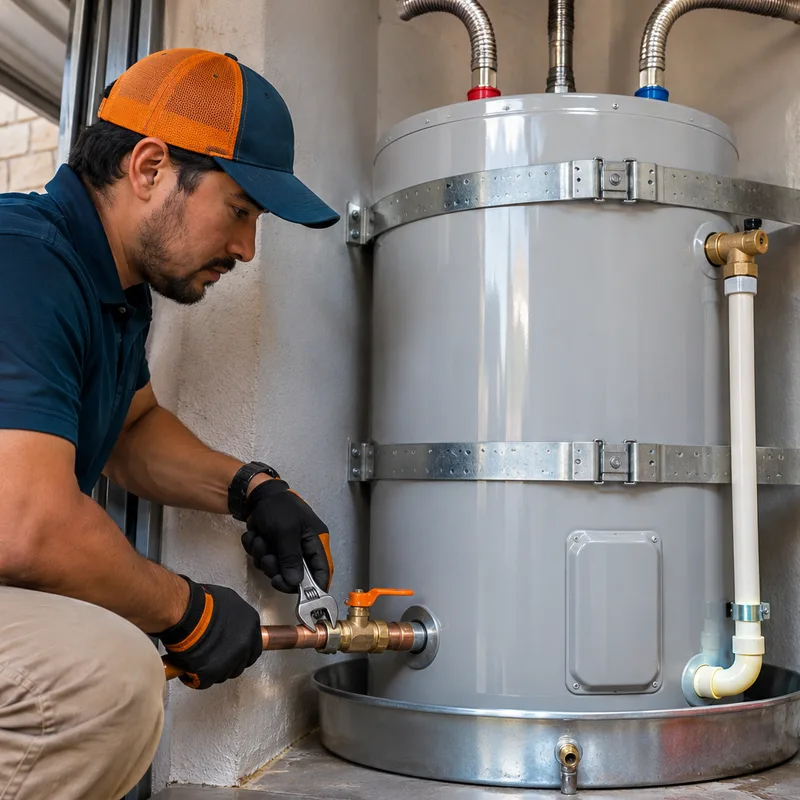
Other sources
Water leaking from a water heater can start above the tank and run down, so check from the top.
Loose or corroded water connectors and fittings. Often repairable. A water heater leaking from top is usually here.
Dripping or discharging means pressure or temperature is too high, or the valve has failed. Do not cap it.
A slow drip at the bottom spigot. Usually repairable.
Gas units can form condensation on a cold tank, especially after a big draw. It should stop as the tank heats.
Rust or seepage from the tank itself. Not repairable; the unit needs replacement.
Water heater leaking right now? Call a local plumber.
Call (726) 268-4856Replacement
Emergency hot water tank replacement is needed when the tank body has failed. Many plumbers stock common 40 and 50 gallon gas and electric tanks for same-visit swaps, but availability depends on the contractor. See San Antonio water heater replacement for what a complete replacement includes.
San Antonio homes
Many San Antonio homes have water heaters in the attic. A leak there can bring down a ceiling, so attic units need a drain pan with a drain line, and a leak detector or automatic shutoff valve is worth adding.
If an attic unit leaks, shut off the water and power or gas right away, then check the ceiling below for sagging before walking under it.
Homeowner questions
It can be. Water near an electric unit is a shock risk, and a relief valve discharging means pressure or temperature is too high. Shut off power or gas and water, and call a plumber.
Not safely if the tank itself is leaking. With the cold supply off, the tank will not refill. A small drain valve drip may allow limited use until repair, but a plumber should check it.
High water pressure, a temperature set too high, thermal expansion in a closed system without an expansion tank, or a worn valve. Never cap or plug the relief valve.
Policies often cover sudden water damage but not the water heater itself or gradual leaks. Check your policy and document the damage with photos.
We are a free referral service. We connect you with an independent local plumber who can respond to leaks in your area.
Tell us where the water is coming from. We will connect you with an independent local plumber who can repair or replace the unit. No obligation to hire.