
Waterlogged tank
Tap the tank. If it sounds full at the top as well as the bottom, the internal bladder has failed.
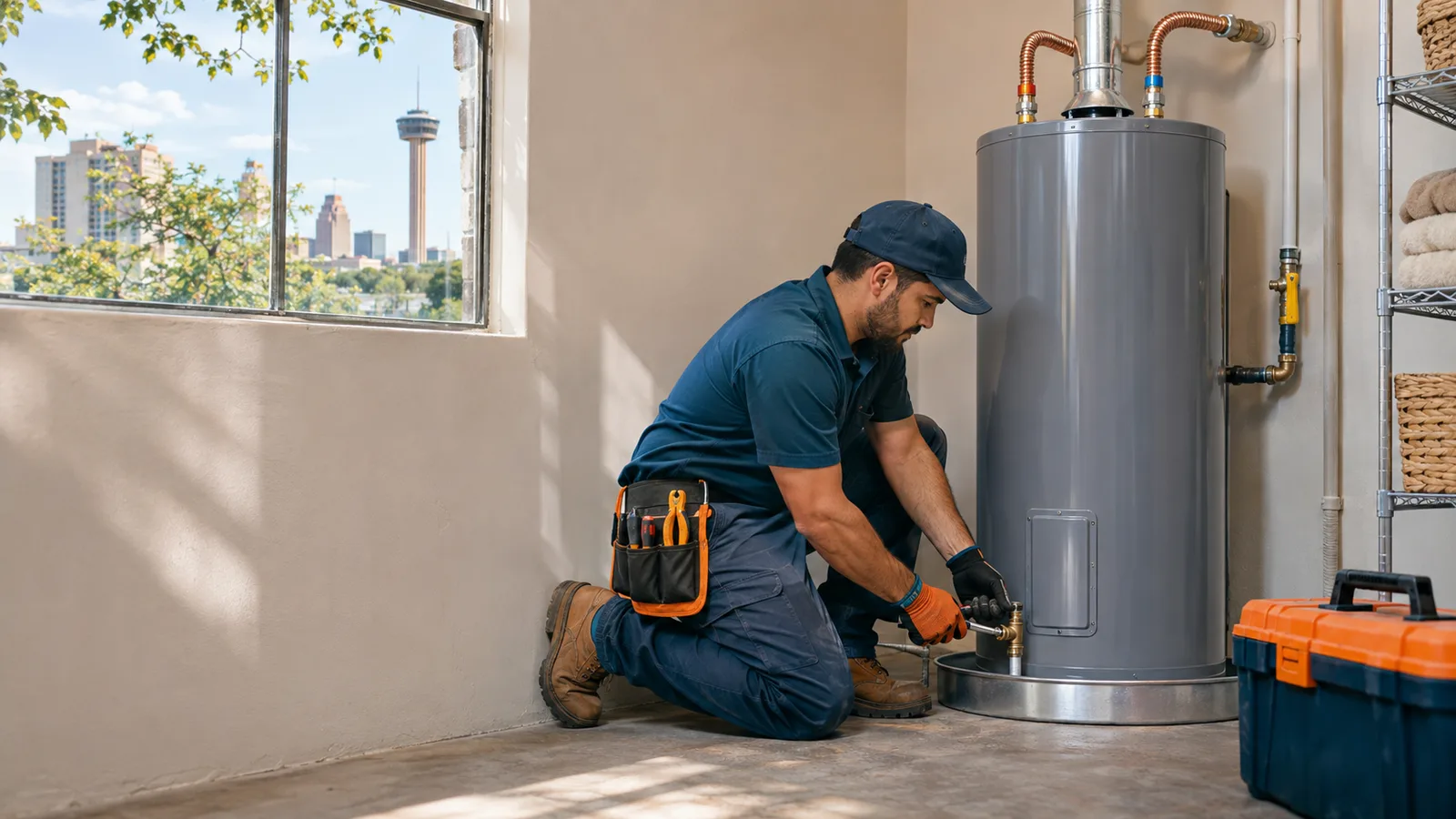
Expansion tank installation and replacement
Relief valve dripping or pressure spiking? An experienced local plumber can check your system and install the right expansion tank.
Call (726) 268-4856Last updated November 8, 2026
Do you need one?
At a glance
A water heater expansion tank gives heated water somewhere to go. Water expands as it heats, and in a closed system that extra volume has nowhere to go, so pressure rises until the relief valve drips.
Plumbing codes require thermal expansion control when a system is closed, which is common where a pressure-reducing valve (PRV) or backflow preventer is installed. An expansion tank is the usual solution.
Sizing
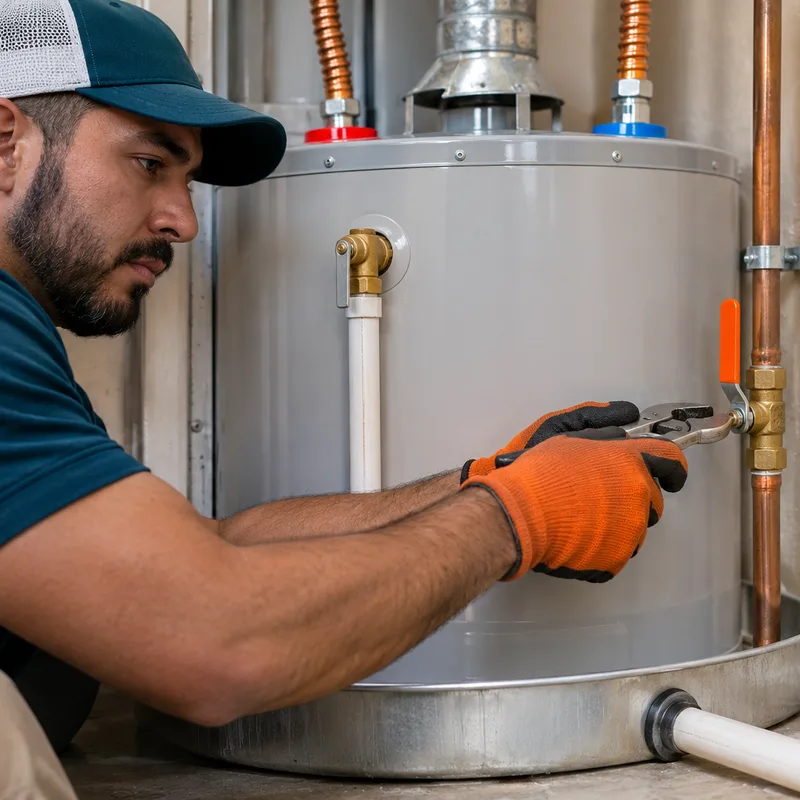
A hot water expansion tank is sized by the water heater's capacity and your home's water pressure. A 2-gallon tank suits many 40 and 50 gallon heaters at normal pressure; larger heaters or higher pressure need a larger tank.
For a water heater expansion tank installation, the plumber mounts the tank on the cold supply line, supports its weight, and sets its air charge to match your water pressure before connecting it.
Pressure
A pressure-reducing valve lowers high street pressure to a safe level for your home, often around 50 to 70 psi. PRV replacement cost depends on the valve size, location and access.
Banging pipes, running toilets, dripping relief valves and pressure that changes through the day.
High pressure stresses the tank, relief valve and connections, and shortens water heater life.
Relief valve dripping? Have your water pressure checked.
Call (726) 268-4856Replacement
Water heater expansion tank replacement is due when the tank shows any of these signs.
Tap the tank. If it sounds full at the top as well as the bottom, the internal bladder has failed.
Water from the Schrader valve on top means the bladder has ruptured.
Corrosion at the connection or on the shell.
Homeowner questions
Thermal expansion control is required by plumbing code when the system is closed. Ask the plumber to check whether your home has a PRV or backflow device that makes it closed.
Often about 5 to 10 years. Many homeowners replace it along with the water heater.
Its air charge should match your home's static water pressure. The plumber measures pressure and sets the tank before installing it.
We are a free referral service. We connect you with an independent local plumber who installs them.
Tell us about your water heater and pressure. We will connect you with an independent local plumber who can check your system. No obligation to hire.