
No Hot Water
The cause may be a failed heating element, thermostat, ignition component, gas control, electrical supply, or another equipment fault. Testing isolates the failure before parts are recommended.
Serving San Antonio, Texas & surrounding areas
Mon–Fri 8am–6pm Sat 9am–2pm
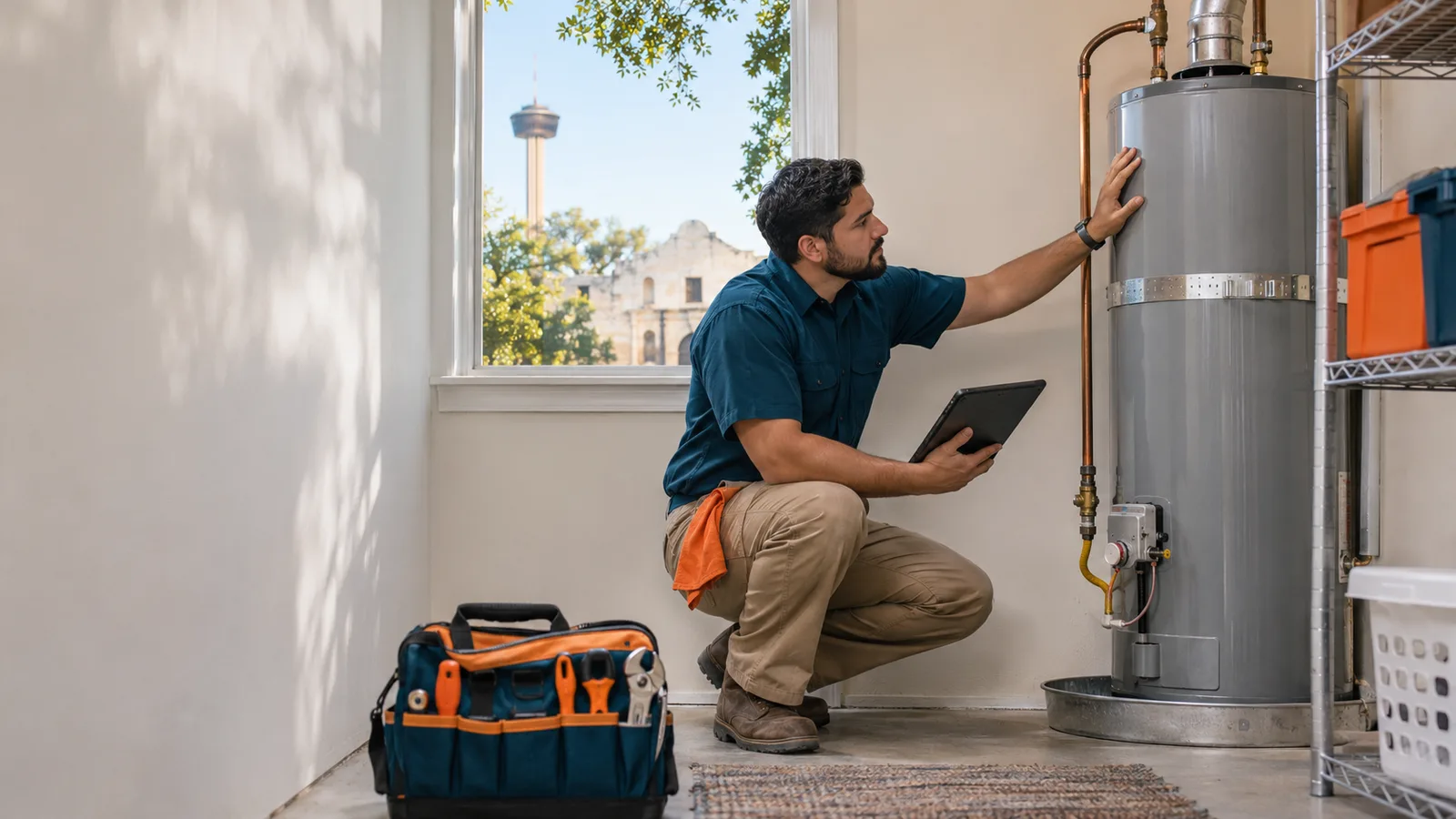
Water heater service in San Antonio
Get a clear diagnosis, practical repair or replacement options, and professional work aimed at restoring dependable hot water.
Clear answers first
Water heater service San Antonio homeowners request often begins with a familiar problem: water that never gets fully hot, a tank that runs out too soon, or moisture collecting around the unit. Other warning signs include popping sounds, rusty-looking hot water, a pilot that will not stay lit, and repeated burner or electrical faults.
Water Heater Replacement San Antonio starts by identifying the equipment, its condition, and the source of the problem. A repair may make sense when the tank is sound and the failed component can be replaced safely. Replacement may be the better use of money when a tank leaks, corrosion is advanced, parts are difficult to obtain, or failures keep returning.
Before work starts, San Antonio's water heater specialists explain the findings and proposed scope, including the unit type, capacity, fuel or electrical requirements, installation conditions, and any safety or code-related work that affects the job.
Service matched to the equipment
Service begins with diagnosis rather than an automatic recommendation to replace the equipment. On a conventional tank, testing may involve the thermostat, heating elements, gas control valve, burner assembly, thermocouple or flame sensor, temperature and pressure relief valve, and visible plumbing connections. The technician should also check for active tank leakage, corrosion, improper venting, and signs of unsafe combustion.
A leaking internal tank is not a repairable component. Replacement is generally required because patching the tank does not provide a safe, lasting fix. When replacement is appropriate, the new unit must match the household's hot-water demand and the property's available gas, electrical, venting, drainage, and installation space.
Work may cover gas or electric tank models and tankless equipment when the property can support it. Tankless conversion is a larger project than exchanging comparable units because it may require changes to gas supply, electrical service, venting, condensate disposal, or water piping. The right choice depends on the house, expected use, and installation cost rather than equipment advertising alone.
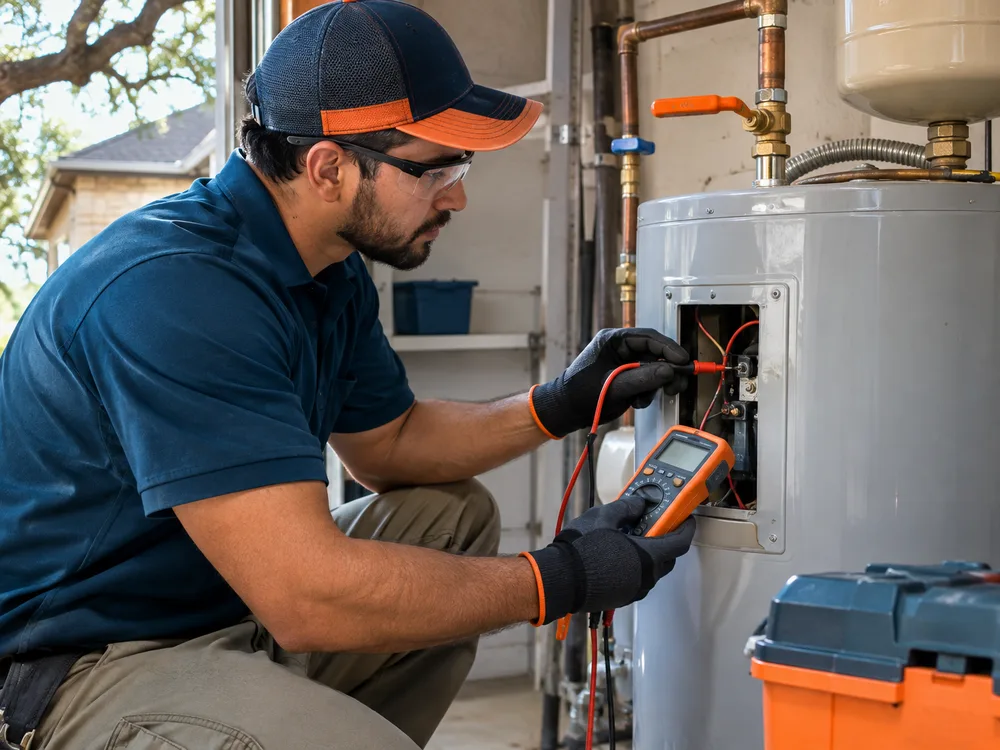
Symptoms and possible causes
The cause may be a failed heating element, thermostat, ignition component, gas control, electrical supply, or another equipment fault. Testing isolates the failure before parts are recommended.
Incorrect settings, a failed element, sediment buildup, a damaged dip tube, or a unit that cannot meet current demand may reduce usable hot water.
Water may come from a fitting, valve, drain connection, discharge pipe, or the tank. Locating the source matters because a leaking tank requires replacement.
Popping or rumbling can be associated with sediment collecting at the bottom of a tank. The unit's condition and maintenance history determine the sensible response.
The technician can determine whether the issue appears limited to hot water and inspect the tank, anode rod, and connected plumbing for relevant conditions.
Gas units may lose ignition or shut down because of control, sensor, venting, or combustion issues. Electric models can have intermittent thermostat, element, or circuit problems.
Local installation factors
Water heater work in San Antonio must account for long cooling seasons and the hot-water demand of an occupied household even when outdoor temperatures are high. Units installed in garages, closets, attics, and utility rooms can present very different access, drainage, combustion-air, and venting conditions. An attic installation, for example, requires careful planning for safe removal, leak protection, and moving the replacement into position.
CPS Energy provides electric and natural gas service within San Antonio, so many local properties use one of those energy sources for water heating. The existing connection does not automatically determine the best replacement, but changing fuel types can add electrical, gas-piping, venting, and permitting considerations.
Housing conditions also vary by area. Alamo Heights includes established homes where utility spaces may be tight and previous plumbing changes need close review. Stone Oak has many larger houses where simultaneous showers and high-demand fixtures can affect capacity selection. Older properties around Monte Vista may have constrained closets or vent paths that complicate a direct exchange. In newer Far West Side subdivisions, confirming the installed capacity and connection layout helps avoid unnecessary alterations. These details matter more than selecting a unit by brand alone.
Cost and scope
Water heater repair in San Antonio typically costs about $200 to $900, while a standard tank replacement often ranges from $1,500 to $3,500. Tankless installation or a conversion can commonly run from $3,500 to $8,000 or more.
The final price depends on equipment type and capacity, fuel source, access, venting, permit needs, code corrections, drain-pan or expansion-control requirements, and modifications to gas, electrical, or water lines. These are general market ranges, not a quote. The exact cost is confirmed after the unit and installation conditions are inspected.
From diagnosis to testing
The visit moves from the reported symptoms to equipment testing, a clear scope, approved work, and final operational checks.
Book Your Free InspectionShare what the unit is doing, where it is installed, whether it uses gas or electricity, and whether there is active water leakage. If water is spreading or a gas odor is present, leave the area as appropriate and seek emergency help.
The technician identifies the model, reviews the installation, checks for leakage and corrosion, and tests relevant controls or components. Gas equipment also requires attention to ignition, combustion, and venting conditions.
You receive a recommendation based on the actual fault and the unit's condition. The scope should identify repair parts or replacement equipment, necessary connection work, and applicable permit or code items.
Approved work is completed with attention to water connections, energy supply, relief-valve discharge, drainage, venting, and manufacturer requirements. Old equipment is removed when replacement is included in the agreed scope.
The unit is filled, started, and checked for proper operation and leaks. You receive basic operating guidance, including temperature controls and any maintenance needs specific to the installed model.
Capacity and safety
Capacity should reflect actual household demand. A small tank may recover too slowly when several fixtures are used close together, while oversized equipment can increase purchase and operating costs. For tank models, first-hour rating is more useful than tank volume alone because it indicates how much hot water the unit can deliver during a busy hour.
Tankless equipment is sized by required flow rate and temperature rise. The technician must consider how many fixtures may run at once and how much the incoming water must be heated. A model's advertised maximum flow is not the whole answer because available flow falls as the required temperature rise increases.
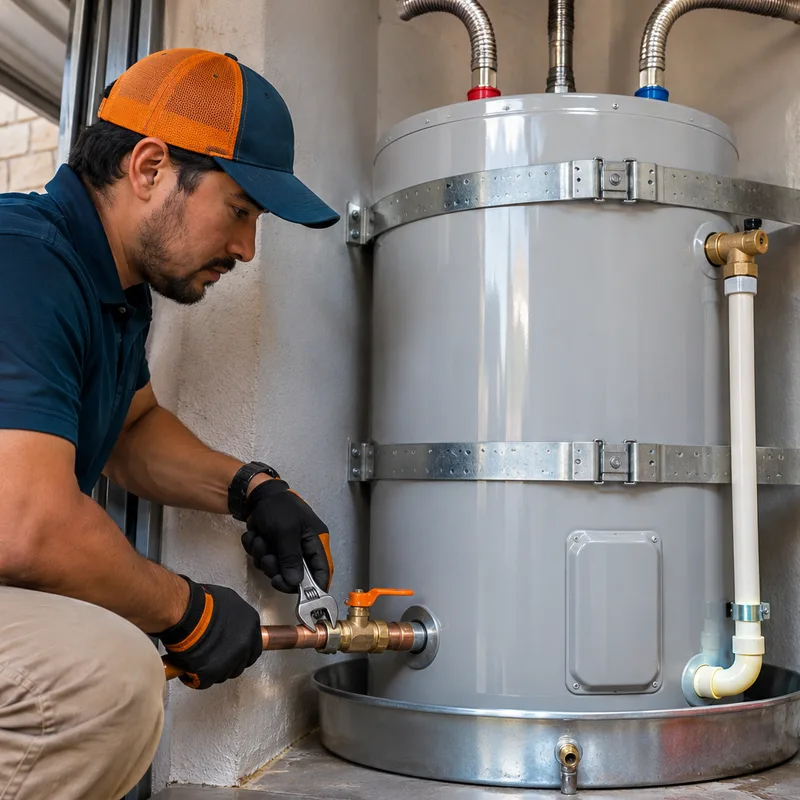
The installation also needs proper safety provisions. Depending on the equipment and property, these may include an approved temperature and pressure relief discharge, a drain pan and drain, thermal expansion control, seismic restraint, suitable venting, and accessible shutoff valves. Applicable requirements depend on the installation, so the job should be evaluated rather than treated as a simple appliance swap.
If hot water is unreliable or the tank is leaking, arrange an inspection before damage spreads or the unit stops working completely.
Call for a Free EstimateHomeowner questions
A straightforward replacement may be completed in one working visit when the correct unit is available and the existing connections are suitable. Attic access, fuel conversion, vent changes, permit requirements, or plumbing and electrical corrections can extend the schedule. Active leakage should be addressed promptly because water can damage flooring, drywall, ceilings, and nearby belongings.
Repair is often reasonable when the tank is sound, the fault is limited to a serviceable component, and the expected repair cost fits the unit's condition. Replacement is usually appropriate when the tank itself leaks, corrosion is advanced, or breakdowns recur. A technician should test the equipment before recommending either option.
Yes, many properties can be converted to tankless water heating, but the existing utilities and installation area must support the selected model. A gas conversion may require a larger gas line, approved venting, combustion air, a receptacle, and condensate disposal. An electric tankless model can require substantial electrical capacity, so panel and circuit requirements must be checked first.
Water heater replacement within the City of San Antonio may require a permit and inspection, particularly when gas, electrical, venting, or plumbing connections are changed. Requirements depend on the property, equipment, and work scope. The proposed job should identify applicable permit and inspection responsibilities before installation begins.
The correct size depends on peak hot-water use, fixture flow, household routines, and the equipment's recovery performance. Tank units should be compared by first-hour rating as well as storage volume. Tankless models require a calculation based on simultaneous flow and temperature rise, which is especially relevant when multiple showers may run at once.
Gas and electric units require different diagnostic methods, and the service plan should match the installed equipment. Electric diagnosis commonly includes thermostats, heating elements, wiring, and circuit supply. Gas diagnosis may involve ignition parts, controls, burner operation, combustion air, and venting. The model and installation conditions should be confirmed when scheduling.
Leave the area and contact the gas utility or emergency services from a safe location if you suspect a gas leak. Do not operate switches, create a flame, or attempt to relight the equipment. CPS Energy provides gas emergency guidance for customers within its San Antonio service territory, and the water heater should not be used again until the condition has been evaluated.
Describe the symptoms, equipment type, and installation location. Water Heater Replacement San Antonio will help arrange an assessment and provide a clear scope based on the condition of your system.