
Site and Utility Review
The installation area is checked for dimensions, access, water connections, fuel or electrical supply, venting, drainage, and service clearance.
Serving San Antonio, Texas & surrounding areas
Mon–Fri 8am–6pm Sat 9am–2pm
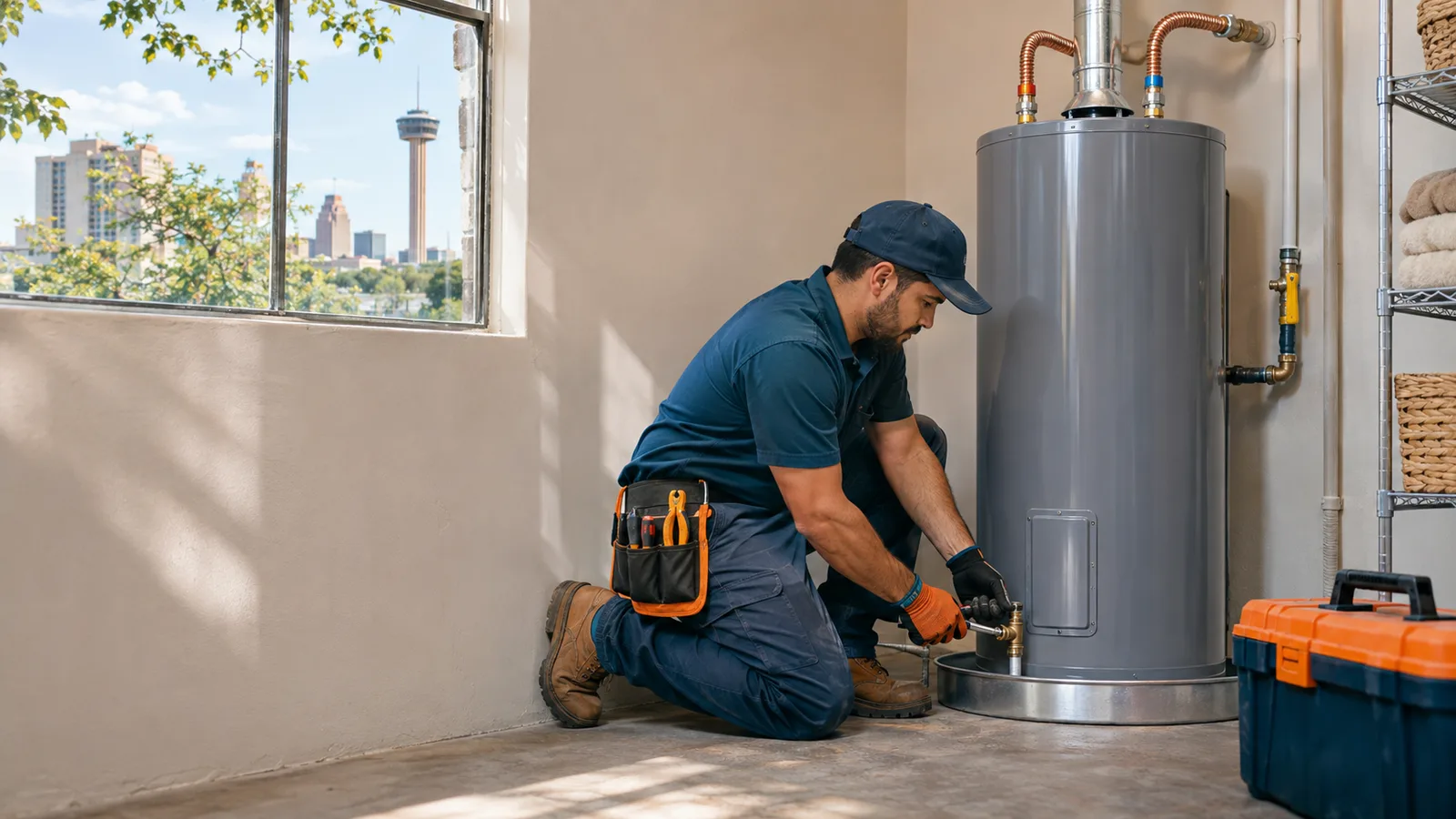
Water heater installation in San Antonio
Get the right tank or tankless unit for your household, installed with careful attention to capacity, connections, venting, drainage, and current code requirements.
Installation planning
Water heater installation in San Antonio starts with more than selecting a unit that fits the available space. Fuel type, household demand, first-hour rating, electrical or gas capacity, venting, drainage, and the condition of existing connections all affect the job. A good installation accounts for those details before the old equipment is removed.
Water Heater Replacement San Antonio helps homeowners compare practical options without pushing unnecessary upgrades. Our water heater specialists serving San Antonio, TX assess the installation area, review hot-water use, identify connection changes, and explain the proposed scope before work begins. The goal is a water heater that suits the home and can be serviced safely in the future.
Local conditions matter. San Antonio's mineral-rich water can leave scale inside a storage tank or on a tankless heat exchanger, so access for flushing and routine maintenance should be considered during installation. Garages, closets, attics, and interior utility rooms also present different requirements for drainage, combustion air, venting, and protection from accidental impact.
Equipment choices
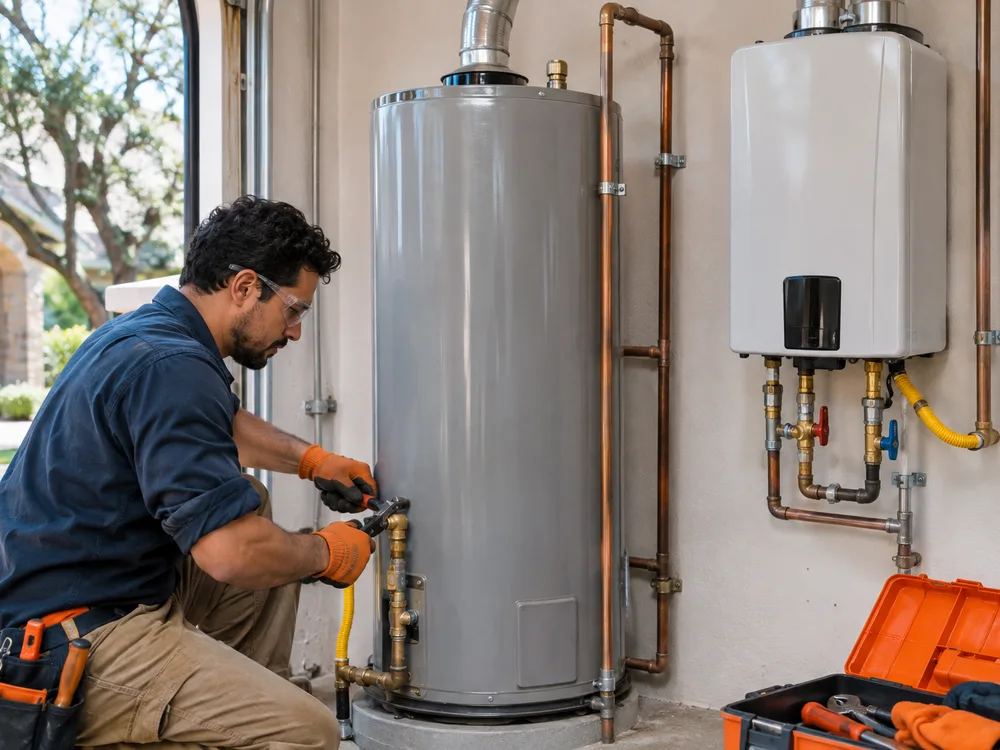
A conventional storage water heater keeps a set volume of hot water ready for use. The right model is selected by capacity and first-hour rating, which estimates how much hot water the unit can deliver during a busy hour. Storage units are available in gas and electric configurations, and replacement may require updates to the shutoff valve, supply connectors, drain pan, vent connector, or electrical disconnect.
A tankless water heater heats water as it flows through the unit. Selection depends on the required flow rate and the temperature rise between incoming water and the desired outlet temperature. Tankless installation may call for a larger gas line, a dedicated electrical circuit, a different vent system, condensate disposal, or changes to the mounting location. Those requirements should be verified before a unit is ordered.
Heat pump water heaters are another electric option, but they need enough surrounding air volume and a suitable route for condensate. Because they cool and dehumidify the space around them, placement matters. We compare equipment requirements with the actual room rather than treating every home the same.
Complete installation scope
The installation area is checked for dimensions, access, water connections, fuel or electrical supply, venting, drainage, and service clearance.
Household demand, fixture use, recovery rate, first-hour rating, or tankless flow requirements guide equipment selection.
The existing unit is disconnected and removed, then the new water heater is positioned with attention to stability, access, and required clearances.
Water, gas, electrical, vent, temperature and pressure relief, drain pan, and condensate connections are completed as applicable to the chosen unit.
Connections are checked, the unit is started, hot-water delivery is verified, and operating controls are reviewed with the homeowner.
Packaging and installation debris are removed, and the equipment area is left accessible for future inspection and maintenance.
Installation cost considerations
Water heater installation in San Antonio typically costs about $1,200 to $3,500 for a standard tank replacement, while tankless projects commonly run $3,000 to $7,500 or more. These are general, nonbinding ranges. Equipment type, capacity, fuel source, access, permits, venting, code updates, and gas or electrical modifications change the final price. Attic installations and fuel conversions usually involve more labor than a straightforward garage replacement. The exact cost is confirmed after the installation location, existing connections, and selected equipment are reviewed.
From assessment to startup
A planned sequence helps confirm the equipment, protect the property, complete each required connection, and verify dependable operation.
Book Your Free InspectionWe review the current unit, installation location, utility connections, venting, drainage, access, and the household's hot-water needs.
You receive a clear recommendation covering unit type, capacity, required connection changes, and work that must be completed for the installation.
Utilities are shut off, the storage tank is drained when applicable, and the old equipment is disconnected and removed carefully.
The new water heater is set in place and connected to the water, energy source, relief piping, drainage, venting, and condensate system as required.
The system is filled or commissioned, connections are checked for leaks, combustion or electrical operation is verified, and hot-water delivery is tested.
San Antonio property conditions
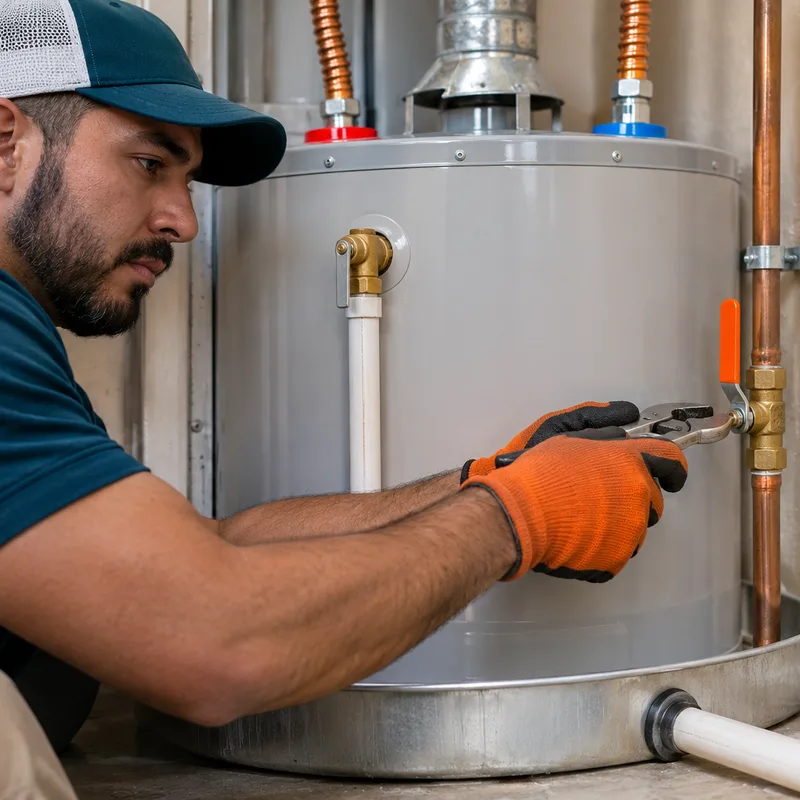
San Antonio homes place water heaters in several types of spaces. A garage installation may need impact protection when the unit is exposed to vehicle traffic. An attic installation calls for careful planning around access, drain pans, discharge routing, and the risk that a leak could damage finished rooms. A closet containing fuel-burning equipment must have suitable combustion air and an approved vent arrangement.
Housing also varies across the area. Older homes in established neighborhoods such as Monte Vista may have tight utility spaces or legacy gas and electrical connections that need evaluation before new equipment is selected. Alamo Heights includes homes of different ages where the route for venting or new piping can affect the scope. In newer Stone Oak construction, dedicated utility areas may provide better access, but existing drain and vent details still need to be checked rather than assumed.
Permitting and inspection requirements can depend on the property's jurisdiction and the work involved. Installations within the City of San Antonio may involve Development Services requirements, while incorporated suburbs can use their own processes. CPS Energy provides electric and natural gas service in much of San Antonio, so the available service and meter capacity may also affect projects that increase energy demand.
A site review can identify sizing, access, venting, and utility issues before equipment is ordered. Get a written scope and a clear installation plan based on your home.
Call for a Free EstimateHomeowner questions
A straightforward replacement can often be completed within one working day. Extra time may be needed for an attic location, tankless conversion, fuel change, new venting, gas-line work, electrical upgrades, or permit and inspection scheduling. The installation area and existing connections should be reviewed before a firm schedule is given.
The correct size depends on peak hot-water demand, not square footage alone. Storage units are compared by tank capacity and first-hour rating, while tankless units are selected by simultaneous flow rate and required temperature rise. The number of occupants, bathrooms, showers, tubs, and hot-water appliances all affect the recommendation.
A tank can often be replaced with a tankless model if the home can support the unit's gas, electrical, venting, condensate, and flow requirements. Some San Antonio installations need a larger gas line, dedicated electrical power, new vent termination, or water-line changes. A site assessment determines whether conversion is practical and what it will cost.
A permit may be required based on the property's jurisdiction and the work included. The City of San Antonio Development Services Department administers permits and inspections within city limits, while incorporated suburbs may have different requirements. Gas, electrical, venting, and plumbing changes can affect which approvals apply.
The best choice usually depends on the utilities already available, installation cost, equipment requirements, and expected hot-water demand. Replacing like for like is often simpler. Switching fuel sources may require gas piping, a new circuit, venting changes, or removal of obsolete connections, so the full conversion scope should be priced before making a decision.
Clear a safe path to the water heater and remove stored belongings around the equipment. For attic units, access must be unobstructed and able to accommodate the replacement unit. The installer should know about leaks, unusual noises, electrical problems, gas odors, or previous repairs before work starts.
Mineral content can create scale and sediment that reduce heat transfer and restrict flow over time. Storage tanks benefit from periodic sediment flushing when the manufacturer permits it, while tankless heat exchangers may need descaling. Installing accessible isolation valves on a tankless unit makes future flushing easier.
An attic installation may be possible when access, structural support, service clearances, drainage, venting, and applicable code requirements are satisfied. A properly routed drain pan is especially important because a leak can affect ceilings and finished rooms. Replacement equipment must also fit through the available access opening.
Tell Water Heater Replacement San Antonio about your current unit, installation location, and hot-water needs. We will help you compare suitable equipment and define the work required before installation begins.