
Gas Storage Water Heaters
Gas tank units use a burner and require an approved fuel connection, combustion air, and venting. Replacement includes checking the shutoff, connector, draft path, and installation clearances.
Serving San Antonio, Texas & surrounding areas
Mon–Fri 8am–6pm Sat 9am–2pm
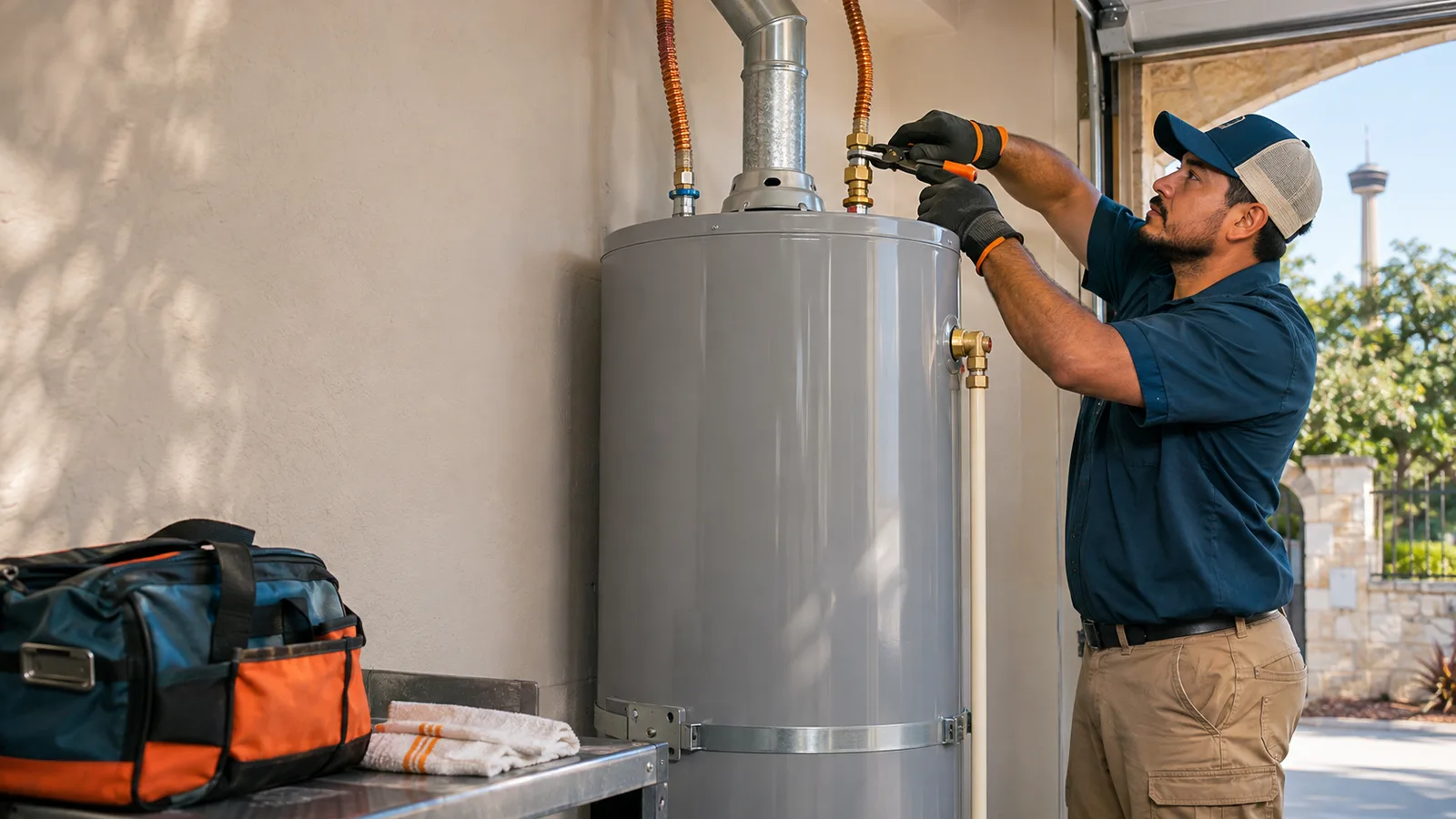
Water heater replacement in San Antonio
Get a properly sized replacement, a clear installation plan, and dependable hot water from a local team that works with gas, electric, tank, and tankless systems.
Replacement guidance
A failing water heater can show up as rusty water, inconsistent temperature, unusual tank noises, moisture around the base, or a complete loss of hot water. When you need help with a water heater in San Antonio, the first step is determining whether a safe, practical repair remains possible or replacement makes better financial sense.
Water Heater Replacement San Antonio assesses the existing equipment, its age and condition, household demand, available fuel source, venting, drainage, and installation space. During this process, an experienced water heater team in San Antonio explains the viable choices and provides a written scope before work begins. The goal is a correctly sized unit that fits the property and its normal hot-water use, rather than simply replacing the old tank with whatever happens to be available.
San Antonio installations vary by property. Older homes near Monte Vista may have compact utility areas and existing vent systems that require careful measurement. Alamo Heights properties may place equipment in garages, closets, or attics, each of which creates different access and protection requirements. Newer homes in Stone Oak often have modern plumbing layouts but still need capacity matched to the household. In communities such as Leon Valley and Helotes, fuel type, installation location, and local permitting jurisdiction must all be confirmed before work starts.
Sizing and equipment
The right replacement depends on peak demand, not just the number printed on the old tank. A conventional storage water heater keeps a set volume ready for use. It is familiar, generally straightforward to install, and available in gas and electric models. Tankless equipment heats water as it flows, which reduces the need to store hot water, but the home must have suitable gas capacity or electrical service, venting, and water flow.
For tank models, we consider first-hour rating, recovery rate, physical dimensions, energy source, and the number of fixtures likely to run together. For tankless models, sizing is based on required gallons per minute and the temperature rise between incoming water and the desired outlet temperature. A tankless conversion may also require a larger gas line, a dedicated electrical circuit, condensate disposal, or new venting.
San Antonio's mineral-rich water can leave scale inside tanks and heat exchangers. Equipment selection and future maintenance planning should account for that condition. Tankless units in particular benefit from periodic descaling based on manufacturer guidance and actual water conditions. A water treatment system may help in some homes, but it should be selected separately rather than treated as a substitute for correct water-heater maintenance.
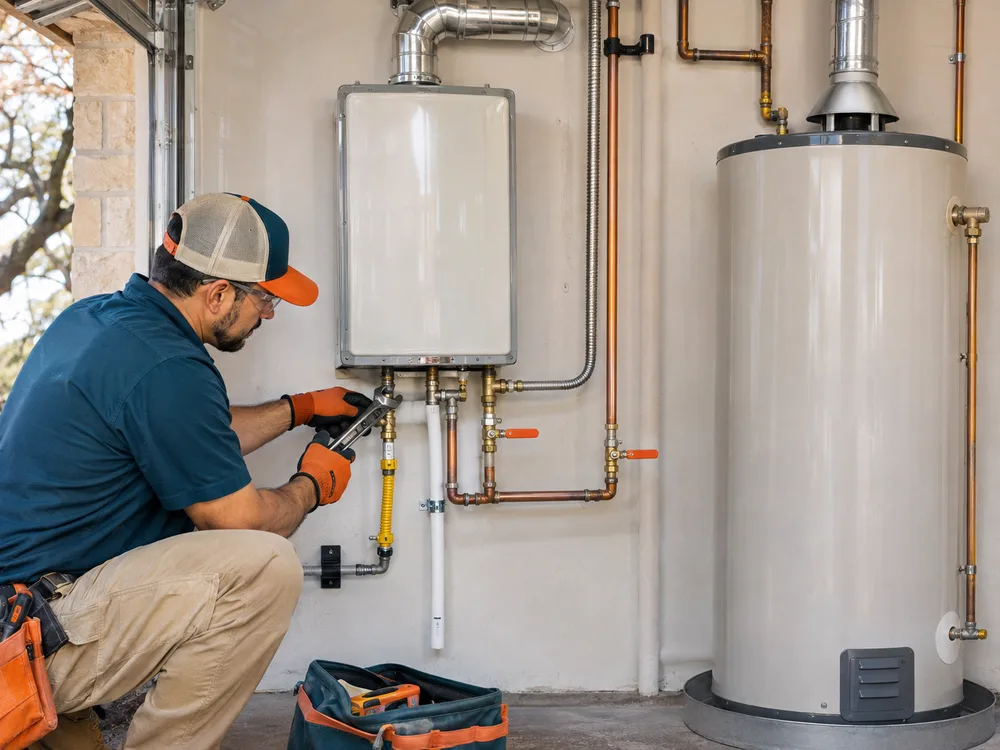
Equipment and installation options
Gas tank units use a burner and require an approved fuel connection, combustion air, and venting. Replacement includes checking the shutoff, connector, draft path, and installation clearances.
Electric tanks use heating elements and require a correctly sized dedicated circuit. The installation should confirm voltage, overcurrent protection, grounding, and a safe disconnecting method.
Tankless systems supply continuous hot water within their rated flow capacity. Proper sizing, service valves, venting, gas or electrical capacity, and condensate handling affect whether a conversion is practical.
Heat pump models can be efficient in suitable spaces, but they need adequate air volume, drainage, electrical service, and clearance. They also cool and dehumidify the surrounding area during operation.
The installation may require an expansion tank, drain pan, discharge piping, seismic restraint, vent changes, or other corrections. Requirements depend on equipment, location, and the authority with jurisdiction.
Replacement includes disconnecting and removing the old unit, setting the new equipment, completing approved connections, testing for leaks, and confirming proper startup and temperature control.
From assessment to startup
A careful replacement process accounts for the existing installation, household demand, required utilities, approved scope, and final operational checks.
Book Your Free InspectionWe identify the unit's fuel type, capacity, age, condition, vent arrangement, electrical needs, shutoffs, drain access, and physical clearances. We also discuss hot-water demand and any recurring performance problems.
You receive options based on household use and the property's existing utilities. If changing equipment type would require gas, electrical, venting, or plumbing upgrades, those items are addressed before a selection is made.
The written scope identifies the selected equipment and installation work. Permit and inspection needs are determined according to the jurisdiction serving the property, which may be the City of San Antonio or another local authority.
The old system is shut down, drained, disconnected, and removed. The replacement is set in place and connected with the required water, gas or electrical, vent, drain, and safety components.
Connections are checked, the unit is started, and hot-water operation is verified. We review temperature settings, basic controls, manufacturer maintenance, and warning signs that should prompt service.
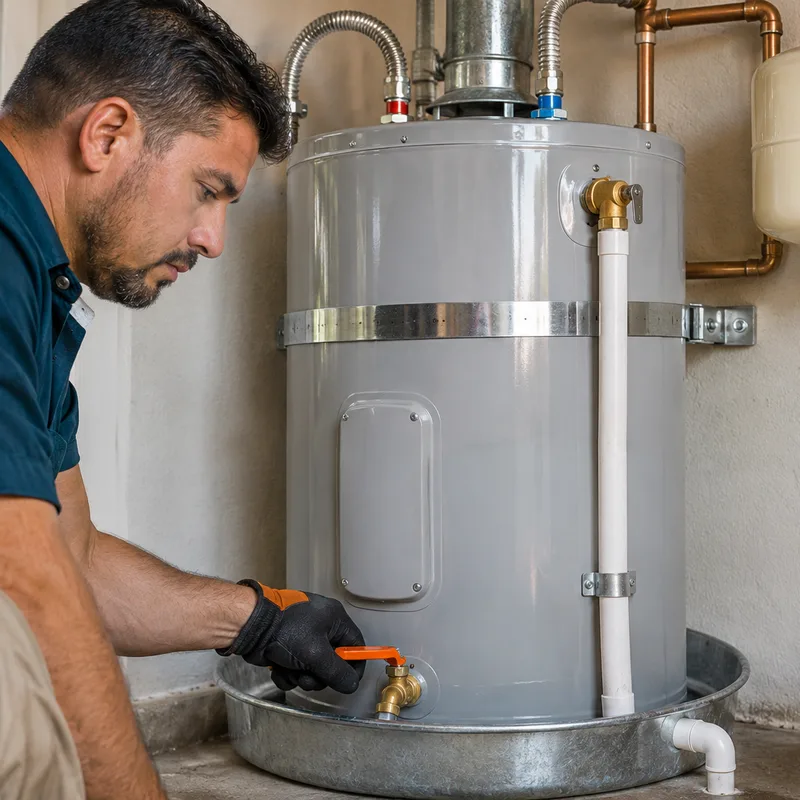
Safe installation planning
A water heater is connected to several building systems, so installation quality matters beyond the tank itself. Temperature and pressure relief valves need unobstructed discharge piping that terminates as required by applicable code. Gas-fired equipment needs sound venting and adequate combustion air. Electric units need proper conductor and breaker sizing. Condensing tankless models also need an approved condensate drain.
Closed plumbing systems can experience pressure increases as heated water expands. Where required, a properly charged thermal expansion tank gives that expanded water somewhere to go. A drain pan may be needed when leakage could damage the building, particularly for units installed in interior closets or elevated locations. In attic installations, access, working space, drainage, and the route used to remove the old unit all affect the job.
CPS Energy provides both electric and natural gas service within its service territory, but the energy source available at a specific property must be verified. The equipment installation also needs to follow manufacturer instructions and applicable plumbing, fuel-gas, mechanical, and electrical requirements. We account for those details in the scope rather than treating them as optional add-ons after work starts.
Planning your investment
Water heater replacement in San Antonio typically ranges from about $1,400 to $3,500 for a standard tank installation, while tankless installations or conversions commonly range from about $3,500 to $7,500 or more. These are general planning ranges, not quotes.
Final price depends on capacity, fuel type, efficiency, access, venting, permit needs, disposal, and required gas, electrical, drain, or code corrections. Attic access and a change from tank to tankless can increase labor and materials. Exact cost is confirmed after the existing installation and proposed equipment are assessed.
Practical equipment decisions
Replacement is usually the practical choice when the tank is leaking from its body, corrosion has affected the vessel, repair parts are unavailable, or the cost of restoring an older unit approaches the value of new equipment. A leaking supply fitting, failed heating element, thermostat, gas control, or relief valve does not automatically mean the tank must be replaced. The source and condition need to be checked first.
Visible water around the base deserves prompt attention. Shut off the energy source only if you can do so safely, keep people away from hot discharge water, and avoid touching wet electrical equipment. A strong gas odor, signs of combustion trouble, or an active electrical hazard requires immediate attention from the appropriate emergency or utility service.
For units that remain serviceable, maintenance can reduce avoidable problems. Tasks may include checking the anode rod, inspecting venting, testing controls, flushing sediment when appropriate, and descaling a tankless heat exchanger. Maintenance methods and intervals vary by manufacturer, model, installation, and local water conditions.
If your hot water is unreliable, the tank is leaking, or you are comparing replacement types, get a clear equipment recommendation and written installation scope before the problem grows.
Call for a Free EstimateHomeowner questions
A straightforward like-for-like tank replacement can often be completed in one service visit, subject to equipment availability, access, permitting, and the condition of existing connections. Attic installations, tankless conversions, vent changes, electrical upgrades, and gas-line work usually take longer. The schedule is confirmed after the installation is assessed.
A water heater replacement may require a permit and inspection based on the work and the authority with jurisdiction. Properties inside San Antonio may fall under City of San Antonio requirements, while nearby municipalities can have their own processes. The property location, equipment type, and scope should be checked before installation.
Choose a tank water heater for a familiar installation and stored hot-water capacity, or consider tankless equipment when continuous supply, available wall space, and the required utility capacity align with your needs. In San Antonio, a tankless conversion must account for gas or electrical capacity, venting, condensate drainage, flow demand, and scale maintenance.
Water-heater size should be based on peak hot-water demand, fixture use, and equipment performance rather than household size alone. Storage tanks are compared by capacity and first-hour rating. Tankless systems are sized by simultaneous flow in gallons per minute and required temperature rise. Existing utility capacity can limit the practical choices.
A replacement can often use the same location if the new unit fits and current access, drainage, venting, clearances, and utility connections are acceptable. Older San Antonio homes may have tight closets or vent arrangements that need correction, while attic locations require careful planning for safe access, removal, and leak protection.
Dissolved minerals can form scale when water is heated, leaving deposits in storage tanks and tankless heat exchangers. San Antonio water is commonly mineral-rich, so flushing or descaling may be appropriate according to the equipment manufacturer's instructions and actual water conditions. Scale can restrict flow and interfere with heat transfer.
Most modern tankless water heaters will not operate during a power outage because their controls, ignition, sensors, and fans require electricity. This includes many gas-fired models. Backup-power compatibility depends on the specific equipment and must follow manufacturer requirements.
Tell us what your current system is doing, where it is installed, and whether you are considering a different equipment type. Water Heater Replacement San Antonio will help you compare practical options and define the work before installation begins.