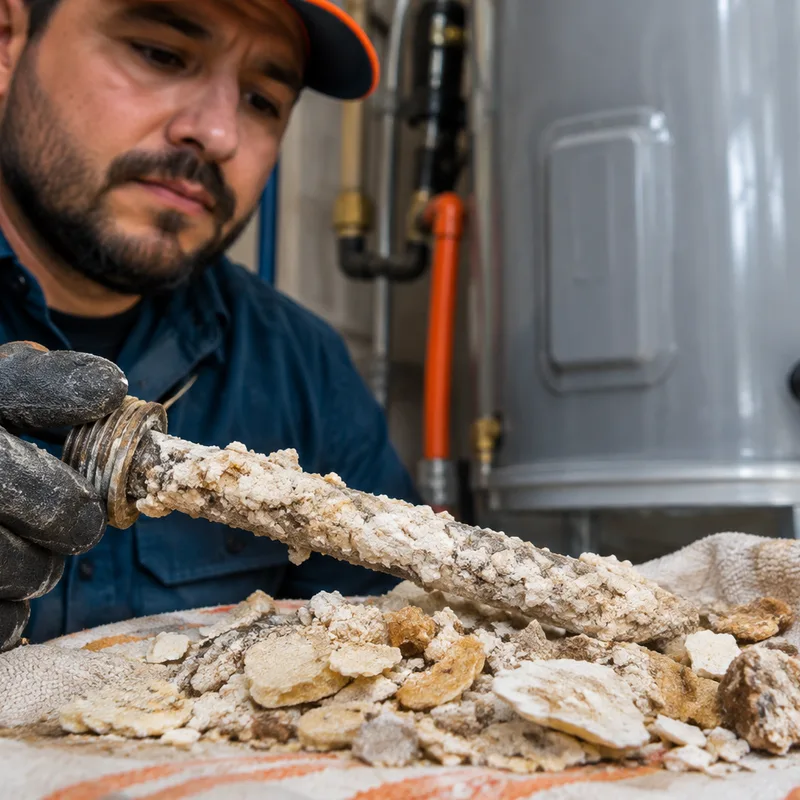
No Hot Water
Electric units may have a tripped breaker, failed element, damaged wiring, or faulty thermostat. Gas models may have ignition, thermocouple, burner, venting, or gas control problems.
Serving San Antonio, Texas & surrounding areas
Mon–Fri 8am–6pm Sat 9am–2pm
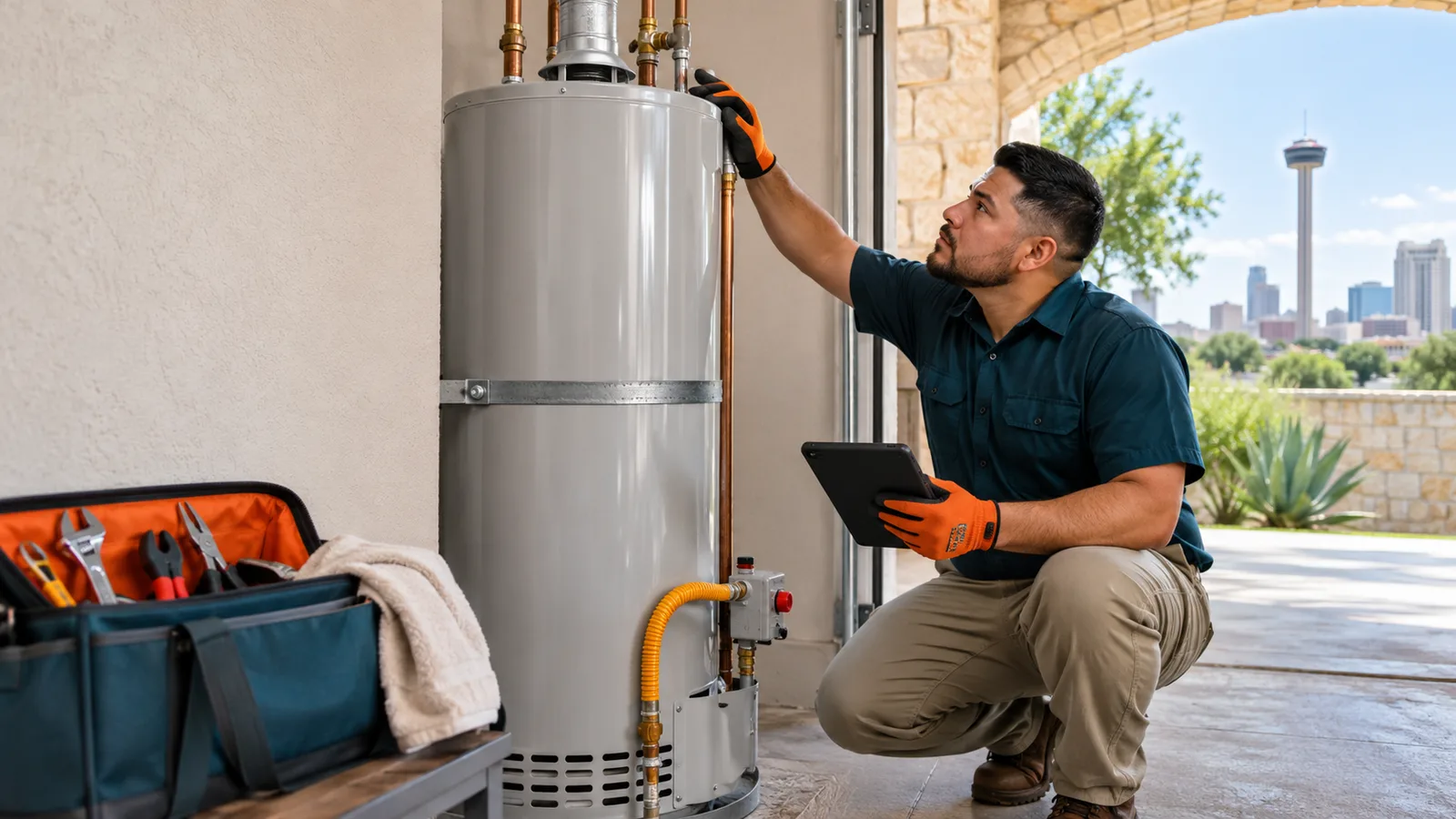
Water heater service in San Antonio
Get a clear diagnosis and an honest repair or replacement recommendation so you can restore dependable hot water without unnecessary work.
Accurate troubleshooting
When hot water runs out too quickly, never gets hot, or stops altogether, a careful diagnosis can separate a straightforward repair from a failing tank. Water heater repair in San Antonio may involve a thermostat, heating element, thermocouple, gas control valve, burner, ignition system, temperature and pressure relief valve, or another component. The first step is identifying the actual fault rather than replacing parts based on symptoms alone.
Leaks need prompt attention. Water around the unit may come from a loose connection, drain valve, relief valve discharge, or corrosion through the tank itself. A leaking fitting may be repairable. A tank that is leaking through its body generally requires replacement because the sealed vessel cannot be patched safely for dependable service.
As San Antonio's trusted water heater team, Water Heater Replacement San Antonio evaluates the unit, explains what failed, and outlines the practical options before work starts. The recommendation considers the heater's condition, repair cost, safety, expected service life, and whether replacement would be a better use of the customer's money.
Symptoms and causes
Electric units may have a tripped breaker, failed element, damaged wiring, or faulty thermostat. Gas models may have ignition, thermocouple, burner, venting, or gas control problems.
An incorrect temperature setting, failed element, burner issue, damaged dip tube, sediment buildup, or undersized unit can reduce available hot water.
The source may be a supply connection, drain valve, relief valve, nearby plumbing, or the tank. Locating the source determines whether repair is reasonable.
Popping or rumbling often points to mineral sediment at the bottom of a tank. Hissing, sizzling, or banging requires inspection to identify the source.
Water that swings between warm and hot can indicate thermostat, element, gas control, flow, or capacity issues. Consistently scalding water also needs prompt correction.
Rust-colored water can be related to corrosion or household piping. Odor may involve the anode rod or water conditions, so the source should be confirmed before parts are changed.
Practical recommendations
Repair often makes sense when the tank is sound, the failure is limited to a replaceable component, and the unit is otherwise operating safely. Common repair candidates include electric elements and thermostats, thermocouples, ignition components, drain valves, and some plumbing connections. Parts must be compatible with the model, fuel type, voltage, and manufacturer specifications.
Replacement becomes the practical choice when the tank itself leaks, corrosion is extensive, multiple components are failing, or the repair would consume too much of the cost of a new unit. A new heater must also be properly sized. The first-hour rating matters for tank models because it estimates how much hot water the unit can deliver during a high-demand hour. Tankless equipment is sized by required flow rate and temperature rise rather than storage capacity.
Local housing varies. Older homes near Monte Vista may have tight utility closets and existing vent configurations that require careful measurement. Alamo Heights includes both established homes and renovated properties, where previous plumbing changes should be checked before installation. In newer suburban construction around Stone Oak, garage installations and modern plumbing layouts are common, but capacity and connection details still need confirmation at the property.
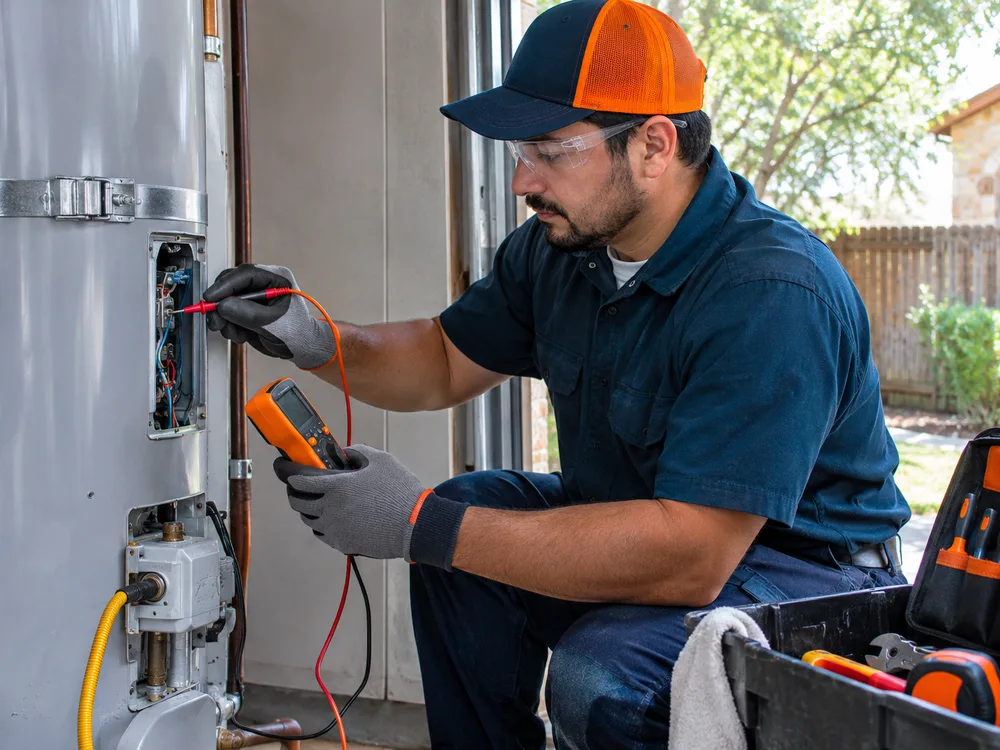
From symptoms to testing
A methodical visit connects the symptoms, equipment testing, recommendation, approved work, and final operational checks.
Book Your Free InspectionTell us whether the unit is leaking, making noise, producing lukewarm water, or failing completely. The heater's fuel type, location, and model information help prepare for the visit.
The technician checks the water heater, accessible connections, controls, safety devices, and relevant power or gas components. Testing is based on the equipment type and reported symptoms.
You receive an explanation of the failure and whether repair is safe and cost-effective. If replacement is advisable, the options account for household demand, available space, connections, venting, and energy source.
Approved repairs are completed with compatible parts. For replacement, the old unit is disconnected and the new equipment is installed according to its listing, manufacturer instructions, and applicable requirements.
The system is checked for leaks and proper operation. Controls and safety components are reviewed, and you receive practical guidance on temperature settings and future maintenance.
Repair cost considerations
Water heater repair in San Antonio typically costs about $150 to $700, while complex controls or extensive work can cost more. Straightforward thermostat, element, thermocouple, or valve repairs usually fall toward the lower or middle part of that range.
The final price depends on the heater type, failed component, parts availability, access, leak source, and whether gas, electrical, venting, or plumbing corrections are needed. If the tank has failed, replacement is quoted separately based on capacity and installation conditions. Exact cost is confirmed after the service inspection.
San Antonio equipment conditions
Mineral content in San Antonio's water can leave scale inside water-heating equipment. In a storage tank, sediment settles at the bottom and can contribute to noise, slow heat transfer, and reduced usable capacity. Scale can also collect on electric elements and inside tankless heat exchangers. The proper maintenance method depends on the equipment and manufacturer instructions; flushing a neglected or deteriorated tank is not automatically the right choice.
San Antonio Water System supplies water across much of the city, while service arrangements can differ in surrounding communities. Regardless of the provider, technicians should evaluate the actual equipment and conditions at the property rather than assume that every home has the same water quality or pressure.
Installation location also matters during repair and replacement. A water heater in a garage has different access and protection considerations than one in an attic or interior closet. Attic installations found in some San Antonio homes demand extra planning because removing a leaking tank and controlling water damage can be difficult. A drain pan, discharge piping, shutoff access, venting, combustion air, expansion control, and electrical or gas connections should be assessed as applicable.
Complete equipment review
The temperature and pressure relief valve, discharge piping, thermostat or gas control, venting, combustion air, and electrical protection are checked as applicable to the unit.
The inspection looks for corrosion, active leaks, moisture tracks, damaged valves, connector problems, and signs that water may be coming from nearby plumbing.
Household usage, fixture demand, tank capacity, first-hour rating, and recovery rate help determine whether poor performance is caused by a fault or inadequate sizing.
Access, clearances, drain pan, shutoff valves, gas supply, electrical service, vent materials, and expansion control can affect the scope of repair or replacement.
A small leak or intermittent heating problem can become a shutdown or water-damage risk. Arrange an inspection to get a clear diagnosis and a written plan for restoring hot water.
Call for a Free EstimateHomeowner questions
A leaking valve or plumbing connection may be repairable, but a tank leaking through its body generally needs replacement. The source must be confirmed because water can travel along pipes or collect beneath the unit. Turn off the heater's energy source and water supply only if you can do so safely, then arrange an inspection promptly.
Many component repairs can be completed during one service visit when the correct part is available and the unit is safely accessible. Timing changes for uncommon controls, warranty parts, attic access, extensive leaks, or problems involving gas, electrical, and venting systems. Replacement may also require additional work if the existing installation needs correction.
Replacement is usually the better choice when the tank leaks, corrosion is advanced, failures are recurring, or repair cost is high relative to a suitable new unit. Age alone does not settle the question. Tank condition, safety, part availability, installation quality, capacity, and repair history should all shape the recommendation.
Popping or rumbling commonly occurs when water is heated beneath mineral sediment in a storage tank. San Antonio water can leave scale, but noise can also have another mechanical or installation-related source. Inspection determines whether flushing is appropriate or whether the tank's condition makes another approach safer.
Gas and electric tank water heaters require different diagnostic procedures, parts, and safety checks. Electric troubleshooting may involve elements, thermostats, wiring, and breakers. Gas troubleshooting may involve ignition components, burners, gas controls, venting, and combustion air. The model and installation must be examined before the repair is approved.
The fuel type, approximate unit age, model and serial information, installation location, and a clear description of the symptoms are useful. Photos can help identify the equipment and access conditions, especially for attic or closet installations. Do not remove covers, open gas components, or touch wet electrical equipment to gather information.
Yes, but the new unit must match household demand and the property's available utilities, space, venting, and electrical or gas capacity. A larger tank is not automatically the right answer. Tank units should be evaluated by capacity and first-hour rating, while tankless units require flow-rate and temperature-rise calculations.
Tell Water Heater Replacement San Antonio what the unit is doing and where it is installed. We will help arrange a professional diagnosis and explain whether repair or replacement is the sensible next step.