
Demand and Flow Sizing
Sizing considers fixture flow rates and how many hot-water uses may overlap. The unit's temperature-rise chart, rather than its maximum advertised flow alone, shows what it can deliver under expected conditions.
Serving San Antonio, Texas & surrounding areas
Mon–Fri 8am–6pm Sat 9am–2pm
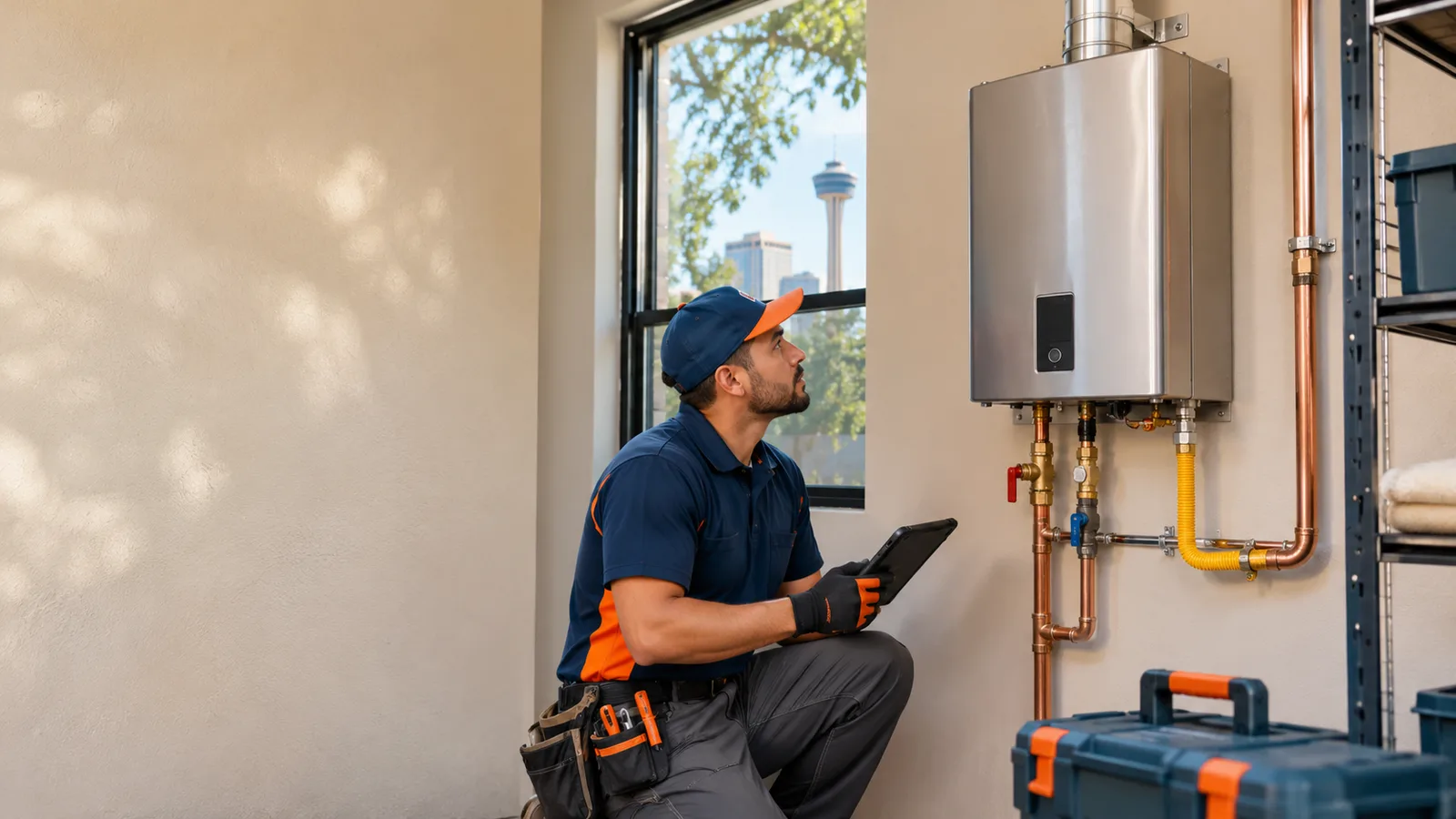
Tankless water heater service in San Antonio
Get a properly sized system, a clear installation plan, and dependable hot water without storing a full tank.
Correctly sized for your home
A tankless water heater heats water when a fixture or appliance creates demand. That can reduce standby energy use and free floor space, but good results depend on correct sizing, adequate fuel or electrical capacity, proper venting, and a sound installation.
Water Heater Replacement San Antonio evaluates the whole setup before recommending equipment. Our team at San Antonio's local water heater service checks the number of bathrooms, expected simultaneous use, incoming water temperature, installation location, existing connections, vent route, condensate handling, and access for future maintenance. That information determines whether a particular unit can deliver the needed flow without an unwanted temperature drop.
San Antonio projects vary widely. An older home in Monte Vista may have a tight mechanical area and an existing gas line that needs evaluation. Alamo Heights properties may require careful planning around finished utility spaces, while newer construction around Stone Oak often has different vent paths and service layouts. In every case, the equipment must fit the actual building rather than a generic household-size estimate.
Installation readiness
Tankless equipment has a high firing rate because it heats moving water in real time. A gas model may need a larger gas supply than the storage unit it replaces, plus manufacturer-approved venting and combustion air arrangements. High-efficiency condensing units also produce condensate that needs an approved drain path and, depending on the installation, neutralization.
An electric tankless model avoids gas venting, but whole-home units can require substantial amperage and multiple dedicated circuits. The electrical service and panel capacity must be checked before installation. A model that fits on the wall is not necessarily a model the building can support.
Local permitting and inspection requirements depend on the property and scope. Work within San Antonio may involve the City of San Antonio Development Services Department, while properties outside city limits can fall under another authority having jurisdiction. The installation plan should account for the applicable plumbing, fuel-gas, electrical, venting, and manufacturer requirements before work begins.
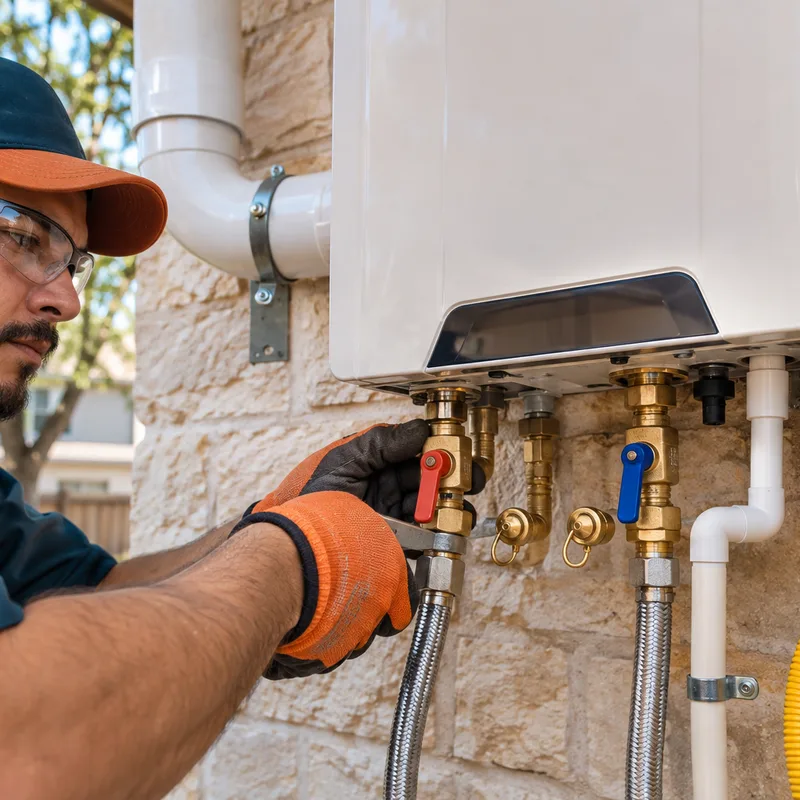
Complete installation scope
Sizing considers fixture flow rates and how many hot-water uses may overlap. The unit's temperature-rise chart, rather than its maximum advertised flow alone, shows what it can deliver under expected conditions.
Gas units require an adequate supply at the specified pressure and load. Electric models require confirmed panel capacity, conductor sizing, breakers, and dedicated circuits.
The vent system must match the listed appliance and manufacturer instructions. Condensing models also need planned condensate drainage using compatible materials.
Isolation valves and service ports allow flushing without dismantling the system. A pressure-relief arrangement and other required components are installed according to the selected unit and applicable code.
Startup includes leak checks, operational testing, temperature setup, and verification that fixtures receive stable hot water under realistic demand.
The mounting location should leave the manufacturer-required clearances and practical access to filters, valves, controls, and vent connections.
From assessment to startup
A careful installation process connects household demand, equipment sizing, utility preparation, code-aware installation, and final performance testing.
Book Your Free InspectionWe review household usage, simultaneous fixture demand, existing equipment, available wall space, utility capacity, water connections, and possible vent or condensate routes.
The recommendation is based on required flow at the expected temperature rise. The written scope identifies the equipment type and any needed gas, electrical, plumbing, venting, drainage, or mounting work.
The existing unit is taken out of service as applicable, mounting and utility connections are prepared, and required protective components are placed for accessible maintenance.
The tankless unit is secured and connected according to its listing, manufacturer instructions, and applicable requirements. Venting and condensate components are completed when the selected model requires them.
We test for leaks, confirm ignition or electrical operation, check hot-water delivery, set the temperature, and explain routine filter cleaning and flushing needs.
Installation cost considerations
Tankless installation in San Antonio typically ranges from about $3,000 to $7,500 for many whole-home projects. A straightforward installation with suitable existing utilities may fall near the lower end, while gas-line changes, new venting, condensate drainage, electrical upgrades, or difficult access can raise the total. Equipment capacity, fuel type, efficiency class, mounting location, permit needs, and removal of the old unit also affect price. The exact cost is confirmed after an on-site assessment of demand, utility capacity, and installation conditions.
Equipment and water-quality fit
The right model is the one that meets peak demand at the required temperature rise and works with the building's utilities. Gas-fired units often support higher whole-home flow, but the existing gas meter, piping, pressure, vent route, and combustion setup must be suitable. Electric units can work well in selected applications, though the available electrical service may limit whole-home use.
Condensing gas models recover additional heat and commonly use plastic vent materials permitted by the manufacturer. Non-condensing models discharge hotter exhaust and use their specified vent systems. Either type can perform well when it is installed as listed. Equipment selection should also account for warranty terms, service access, replacement parts, freeze-protection instructions, and maintenance requirements.
San Antonio water contains dissolved minerals, so scale control deserves attention. The rate of accumulation varies by water source, temperature, use, and treatment. Accessible flush valves, inlet-filter cleaning, and maintenance performed at the manufacturer's interval help protect the heat exchanger. Water quality testing can show whether additional treatment is appropriate for a particular property.
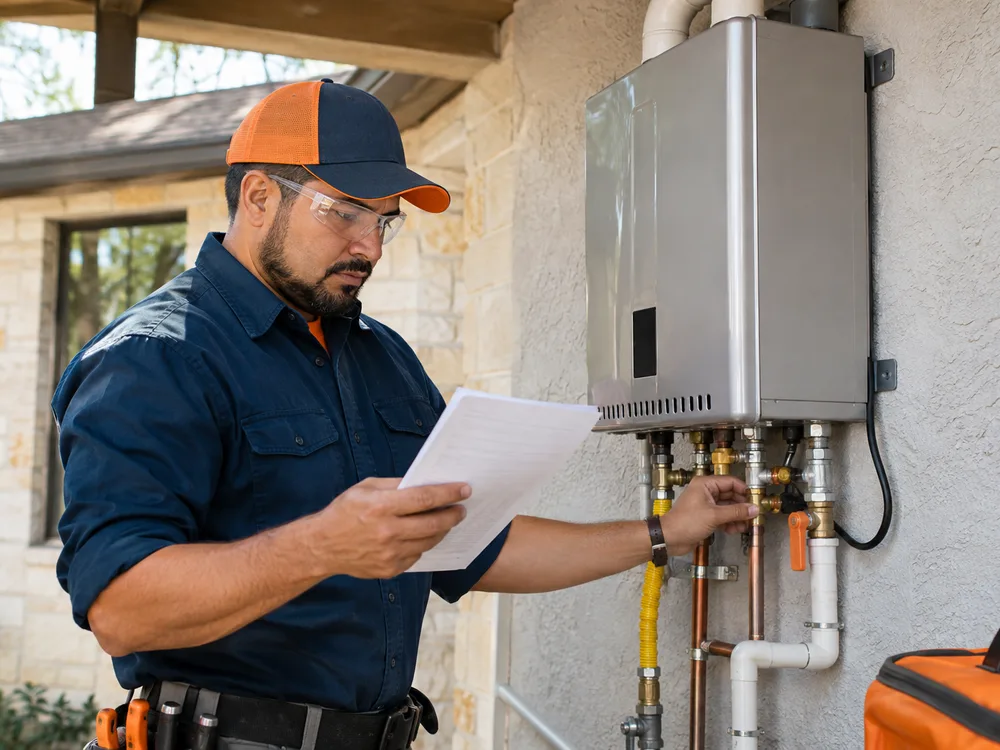
Get a written scope based on your hot-water demand, utility capacity, and installation conditions before selecting equipment.
Call for a Free EstimateHomeowner questions
A straightforward installation can often be completed within one working day, while utility upgrades, vent changes, permits, or difficult access can extend the schedule. Replacing a storage unit with tankless equipment usually requires more preparation than exchanging similar units because gas capacity, electrical service, venting, condensate drainage, and mounting must all be addressed.
Yes, if the unit is sized for the combined flow at the required temperature rise. The calculation should include showerheads and any appliances or faucets likely to run at the same time. Manufacturer performance tables show how available gallons per minute change as the required temperature rise increases.
The existing gas line can be reused only if it can supply the appliance's required input while other connected appliances are operating. Pipe diameter alone does not answer the question. Fuel type, developed length, fittings, supply pressure, meter capacity, and total connected load must be evaluated.
Yes, gas tankless equipment requires the venting specified by its listing and manufacturer. Condensing and non-condensing units have different exhaust temperatures and approved materials. Vent length, termination clearances, fittings, combustion air, and the route through the building all affect the installation.
A permit and inspection may be required depending on the address and work involved. Properties within San Antonio are generally subject to City of San Antonio requirements, while another authority may govern an address outside city limits. The scope should identify the jurisdiction and applicable permit needs before installation.
The correct flushing interval is the interval stated by the manufacturer and adjusted for local water quality and use. Mineral accumulation can restrict heat-exchanger passages and reduce performance. A service visit may include isolating the unit, circulating an approved descaling solution, cleaning the inlet filter, and checking the vent and condensate system.
Yes, many properties can convert, but the installation area and utilities must be assessed first. A conversion may require a different gas supply, a new vent route, condensate drainage, additional electrical power, or wall reinforcement. The available space alone does not determine suitability.
The temperature should follow the manufacturer's guidance and the household's safety and usage needs. Higher settings increase scald risk and can accelerate mineral scale. Dishwashing, plumbing layout, recirculation, and any code-required temperature controls also affect the appropriate setting.
Tell Water Heater Replacement San Antonio about your current equipment, household demand, and installation area. We will assess the practical requirements and outline a clear path to dependable hot water.